
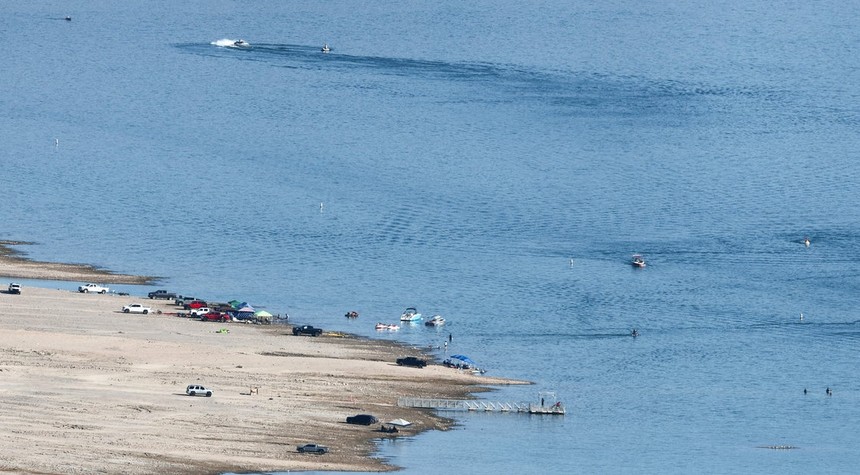
Human skeletal remains were discovered Sunday at Lake Mead, marking yet another grim finding as the nation’s largest reservoir continues its unprecedented decline amid persistent drought conditions in the American West.
The National Park Service confirmed that apparent human bones, including a jawbone with teeth still intact, were found along the shoreline of Boulder Beach on the Nevada side of the lake. Park rangers and the Las Vegas Metropolitan Police Department responded to the scene following a report to the Lake Mead Interagency Communications Center on August 16.
The discovery was made by a group of visitors who had come to the lake for recreational purposes. One member of the party was examining rocks along the shoreline when he picked up what appeared to be a jawbone, complete with visible teeth. The incident remains under investigation, and authorities have released no further details at this time.
The Clark County Coroner’s Office has taken custody of the remains, though the Las Vegas Metropolitan Police Department has indicated it is not actively investigating the matter, suggesting the death may not be recent or suspicious in nature.
This discovery comes as Lake Mead faces an environmental crisis of historic proportions. On Monday, water levels at the reservoir dropped to 1,039.77 feet above sea level, according to the United States Bureau of Reclamation. This measurement falls well below the previous record low established just last month in July, underscoring the severity of the ongoing drought affecting the western United States.
The dramatic recession of the waterline has transformed Lake Mead into an unintended archaeological site of sorts. As one visitor observed Monday, the water level appears significantly lower than normal conditions would dictate. The stark reality is simple: as water levels continue their descent, previously submerged areas of the lakebed are being exposed to sunlight for the first time in decades.
This is not an isolated incident. The receding waters have revealed multiple sets of human remains throughout this year, raising questions about the lake’s history and the stories yet to be told from its depths. Each discovery presents investigators with the challenge of identifying remains that may have been submerged for years or even decades.
Lake Mead, formed by the construction of Hoover Dam on the Colorado River, serves as a critical water source for millions of Americans across Nevada, Arizona, and California. The reservoir’s declining levels have prompted serious concerns about water allocation, agricultural production, and hydroelectric power generation throughout the region.
The convergence of prolonged drought conditions and scorching temperatures across the West has created what many experts describe as a water crisis with far-reaching implications for the nation’s future. As Lake Mead continues to shrink, it serves as a stark reminder of both the environmental challenges facing the American West and the hidden histories that lie beneath its surface.
Related: Murder Suspect Uses Trust Fund From Slain Parents to Finance Defense
