
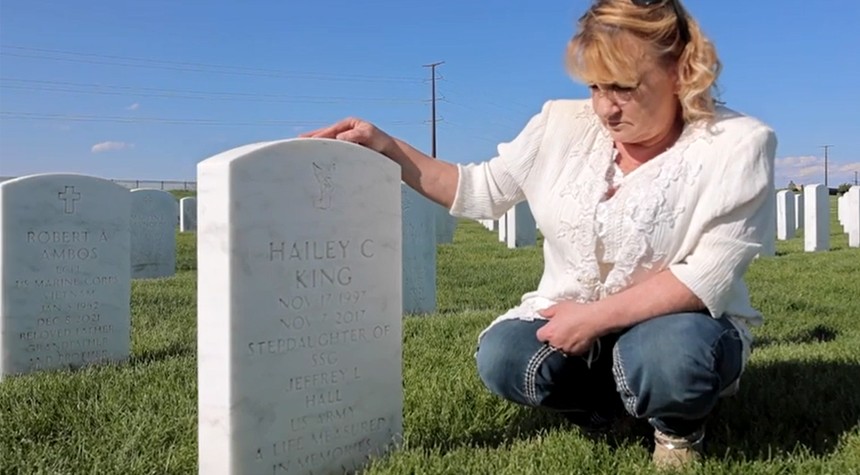
A mother’s promise to her dying daughter has become a mission to prevent similar tragedies from befalling other American families.
Kathy Hall lost her 18-year-old daughter, Hailey King, on November 7 in Fayetteville, Arkansas, when the young woman was struck by a truck traveling 36 miles per hour above the posted speed limit. The driver, Sergio Rodriguez, was in the country illegally at the time of the incident.
According to Hall’s account, her daughter was returning home for dinner, riding a scooter alongside a friend on what should have been an ordinary evening. The truck struck King from behind with such force that she was thrown onto the vehicle’s hood. Rather than stopping, the driver continued forward, swerving into another lane and causing King to fall headfirst onto the pavement.
The injuries King sustained were catastrophic. She suffered a brain stem hemorrhage, multiple cranial hemorrhages both internal and external, a ruptured spleen, and a lacerated liver. Despite medical intervention, she succumbed to her injuries shortly after the collision.
In her daughter’s final moments, Hall made a solemn vow that she would never cease fighting for justice. That promise has transformed into advocacy work aimed at preventing other families from experiencing similar loss.
Hall has shared her story with advocacy organizations focused on border security and immigration enforcement, arguing that her daughter’s death represents a preventable tragedy. The case has drawn attention to questions surrounding immigration policy enforcement and public safety, particularly regarding individuals who remain in the country despite lacking legal authorization.
The circumstances of King’s death have resonated with other families who have lost loved ones in similar incidents. These families, often referred to as “Angel Families,” have become increasingly vocal in national discussions about immigration policy and law enforcement priorities.
Hall’s advocacy centers on the belief that stricter immigration enforcement could prevent deaths like her daughter’s. She has called for policy changes that would ensure individuals without legal status who commit serious offenses face immediate consequences and removal from the country.
The Fayetteville incident adds to ongoing national debates about sanctuary policies, local law enforcement cooperation with federal immigration authorities, and the balance between humanitarian concerns and public safety considerations.
For Hall, however, the policy debates remain deeply personal. Her daughter’s empty chair at the dinner table serves as a daily reminder of the promise she made and the work that remains ahead. What began as a mother’s grief has evolved into a determined effort to ensure that Hailey King’s death was not in vain.
The case continues to work its way through the legal system as Hall pursues her mission to honor her daughter’s memory through advocacy and awareness.
Related: Los Angeles County Identifies Electrical Equipment as Cause of Deadly Eaton Fire
