
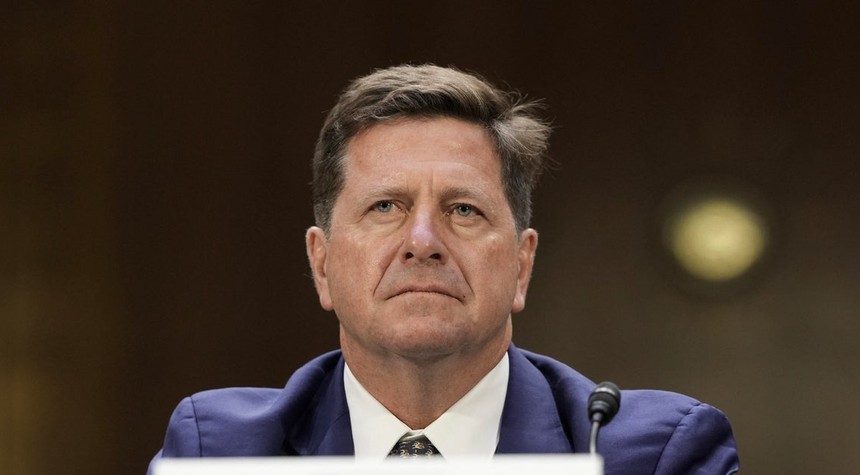
Jay Clayton appeared before the Senate Intelligence Committee Wednesday, pledging to restore public confidence in America’s intelligence apparatus if confirmed as the next Director of National Intelligence.
The former Securities and Exchange Commission chairman and current U.S. Attorney for the Southern District of New York told senators he would adopt a “mission-focused and team-oriented” approach to leading the intelligence community. His primary objective, he stated, would be “enhancing the trust of the American people” in the Office of the Director of National Intelligence.
Clayton’s testimony drew upon his extensive government service to establish his credentials for the position. As U.S. Attorney, he has overseen investigations involving foreign terrorist organizations, counter-espionage operations, money laundering, bribery schemes, and the manipulation of communications platforms designed to undermine public trust. He emphasized his experience as principal liaison with senior officials across the Treasury, State, and Defense departments, relationships that would prove valuable in coordinating intelligence operations.
The confirmation hearing itself represented a significant development after weeks of uncertainty. President Trump abruptly halted Clayton’s nomination process last month, creating confusion about the administration’s intelligence leadership strategy. The president insisted that Clayton’s confirmation should wait until the Senate approved a replacement for his current position in the Southern District of New York. Trump also expressed concern that rushing the nomination would prevent Bill Pulte, his controversial choice for acting intelligence chief, from assuming temporary leadership.
The selection of Pulte, a housing official with no traditional intelligence background, generated considerable opposition in the Senate. Democrats responded by blocking an extension of the warrantless surveillance program authorized under Section 702 of the Foreign Intelligence Surveillance Act, creating a legislative standoff with significant national security implications.
Senate Republicans had initially moved swiftly on Clayton’s nomination, hoping to resolve the surveillance program impasse shortly after its expiration. Those plans collapsed when Trump directed the cancellation of Clayton’s mid-June hearing. Senate Intelligence Committee Chairman Tom Cotton publicly expressed disappointment, calling it “regrettable that the president has directed Jay Clayton not to appear at his confirmation hearing.”
Wednesday’s hearing proceeded with Section 702 authority still lapsed and Pulte continuing as acting Director of National Intelligence, a position he has held since June 19.
Chairman Cotton offered strong support for Clayton during opening statements, describing him as a “seasoned professional in both government and private practice” who has “operated with morality, decency, and integrity.” The Arkansas Republican also outlined his vision for streamlining the intelligence bureaucracy, arguing that the Office of the Director of National Intelligence should employ “dozens, maybe a couple hundreds at the maximum, but certainly not the thousands of recent years.”
The hearing represents a critical juncture for American intelligence operations. With surveillance authorities in limbo and acting leadership in place, Clayton’s confirmation could provide stability to an intelligence community that has faced considerable turbulence in recent months. Whether the Senate will move quickly to confirm him remains uncertain, though Chairman Cotton’s support suggests momentum toward approval.
The American people deserve an intelligence apparatus that operates with transparency, effectiveness, and unwavering commitment to national security. Clayton’s confirmation hearing offered reassurance that these principles remain paramount, regardless of the political complications surrounding his nomination.
Related: Northern Minnesota Declares Emergency as Wildfires Consume 33,000 Acres
