
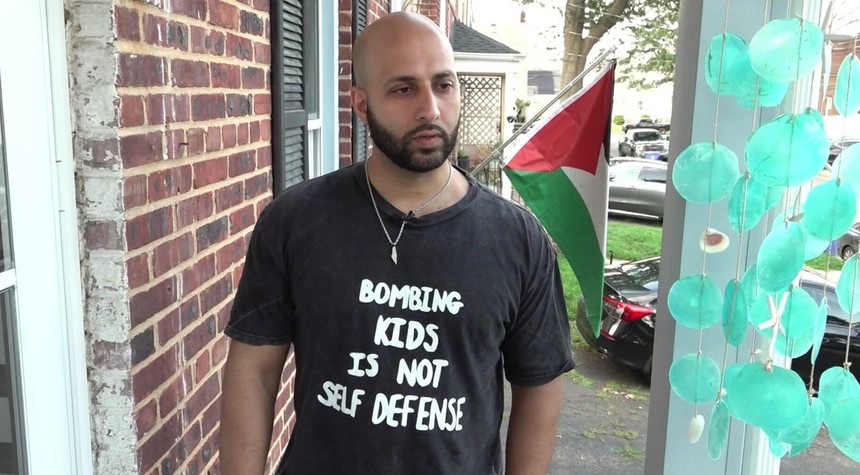
A dispute over political expression aboard a commercial aircraft has raised questions about airline policies and passenger rights after a New Jersey man was removed from his flight and told to change his clothing.
Sam Saadeh of Linden, New Jersey, was boarding a United Airlines flight from Atlanta to Newark Liberty International Airport on June 4 when airline personnel intervened over the message printed on his T-shirt. The garment read, “Bombing kids is not self defense.”
According to Saadeh, who is of Palestinian descent, a supervisor removed him from the aircraft shortly after he had taken his seat. The supervisor informed him that a flight attendant had found his shirt offensive and presented him with an ultimatum: change the shirt or forfeit his seat on the flight.
Saadeh described the encounter as both confusing and humiliating. He stated that he complied with the airline’s demand and changed his clothing, but received no satisfactory explanation for why his shirt violated company policy. Even after landing in Newark, where he sought clarification from additional airline personnel, Saadeh said he was met with vague responses about the shirt being offensive without specific reasoning.
The incident occurs against the backdrop of ongoing conflict in the Middle East. A recent United Nations report documented that more than 20,000 children have been killed in Gaza by Israeli military operations, which the report characterized as targeted attacks. The Israeli government has disputed these findings and maintains that it does not deliberately target civilian populations.
Saadeh maintains that his shirt carries a broader humanitarian message advocating for the protection of children, rather than a specific political stance.
This case highlights the continuing tension between private companies’ authority to set conduct standards and individuals’ rights to political expression. Airlines maintain broad discretion over passenger behavior under federal regulations, particularly regarding conduct that crew members deem disruptive or offensive to other passengers. However, such policies have faced scrutiny when applied to political speech.
United Airlines has not issued a public statement regarding this specific incident or clarified which company policy Saadeh’s attire allegedly violated.
The matter raises substantive questions about where airlines should draw the line on political expression, particularly when such expression relates to ongoing international conflicts that generate strong emotions across diverse passenger populations. As commercial aviation serves an increasingly varied public, carriers face the challenge of balancing operational discretion with respect for constitutional principles that, while not directly applicable to private companies, reflect broader American values regarding free expression.
The outcome of any potential complaint or legal action stemming from this incident may provide guidance for how airlines navigate similar situations in the future.
Related: Firefighting Aircraft Crashes in Colorado Reservoir, Pilot Confirmed Dead
