
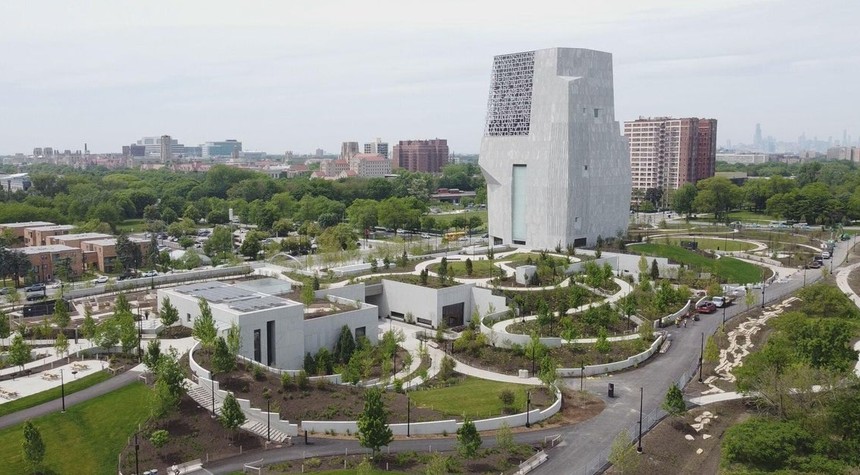
The Obama Presidential Center and Library opened its doors to the public this week in Chicago’s Jackson Park, marking the culmination of more than a decade of planning and construction. The center held a private ceremony Thursday for invited guests before welcoming the general public Friday.
The facility, located in the historic Woodlawn neighborhood on Chicago’s South Side, has generated considerable anticipation among local residents and community organizers who view the presidential center as a catalyst for economic development in an area that has long struggled for investment and attention.
Community volunteers who gathered for the opening expressed optimism about what the center might mean for the surrounding neighborhoods. Long-time supporters of the former president, some dating back to his days in the Illinois State Senate, have committed themselves to ensuring the center’s success and its positive impact on the community.
The question now facing local business owners and community leaders is whether the anticipated influx of tourists will extend beyond the presidential center itself. Residents of Woodlawn, Hyde Park, and South Shore are hoping visitors will explore these neighborhoods, patronize local establishments, and contribute to a broader economic revival.
For years, community advocates have argued that these South Side neighborhoods have been overlooked in Chicago’s development priorities. The presidential center represents not merely a museum and library, but a potential turning point for communities that have weathered decades of disinvestment and economic challenges.
The center’s impact will be measured not only in visitor numbers but in tangible improvements to the surrounding area. Local leaders are watching carefully to see whether the facility will generate the sustained economic activity and investment they believe these neighborhoods deserve.
Tickets for the museum are currently available for purchase. The center joins the ranks of presidential libraries across the nation, though it stands apart as a privately funded institution rather than part of the National Archives system.
The opening represents a significant moment for Chicago, a city deeply connected to the forty-fourth president’s political rise. From community organizer to state senator to President of the United States, the former president’s journey began in these very neighborhoods now hoping to benefit from his legacy.
Whether the Obama Presidential Center will fulfill the economic promises and community aspirations remains to be seen. What is certain is that Chicago’s South Side has placed considerable hope in this institution as a vehicle for change and renewal in communities that have waited patiently for their opportunity.
The coming months will reveal whether this presidential center can deliver on its promise to serve not only as a monument to one man’s presidency, but as an engine of opportunity for the neighborhoods that helped shape his path to the White House.
Related: ICE Officer Saves Drowning Child in Florida Pool Rescue
