
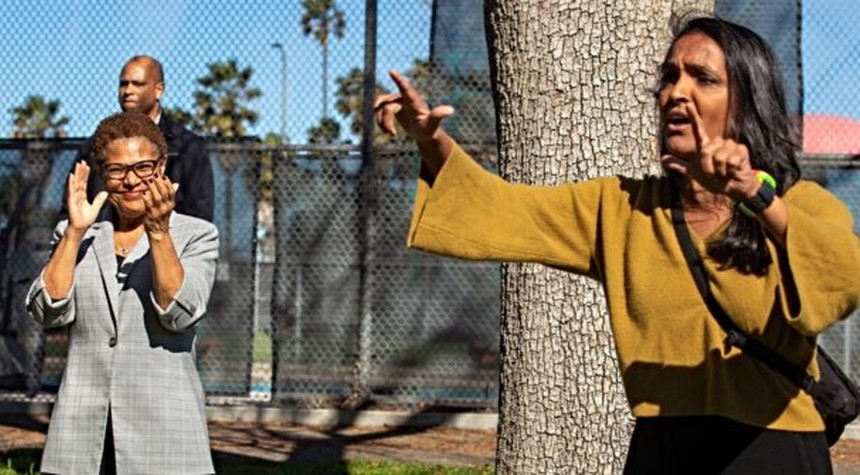
The Los Angeles mayoral race has taken a decisive turn as mail-in ballot counting shifted the standings in the primary election, with Democratic Socialist City Councilwoman Nithya Raman advancing to face incumbent Mayor Karen Bass in November’s runoff.
According to the Los Angeles County Registrar-Recorder/County Clerk, Raman secured 28.5 percent of the vote as of late Monday, edging past Republican candidate Spencer Pratt, who garnered 25.8 percent. Multiple news organizations have projected Raman’s advancement to the general election, though the final ballot count remains incomplete.
The race’s trajectory changed markedly once mail-in votes entered the tallying process. When polls closed last Tuesday, Pratt held second place in the standings. However, his position deteriorated as election officials began processing mail-in ballots, ultimately pushing him out of contention for the November runoff.
This development represents a significant moment for Los Angeles politics. Raman, who serves on the Los Angeles City Council and identifies as a Democratic Socialist, will now challenge Bass, a Democratic former congresswoman who won her first term leading America’s second-largest city in the previous election cycle.
The shift in standings raises familiar questions about mail-in voting procedures and their impact on election outcomes. The pattern observed in this race, where early results favored one candidate before mail-in ballots altered the final standings, has become a recurring feature of California elections in recent years.
Los Angeles faces considerable challenges that the November election will address. The city continues to grapple with homelessness, rising crime rates, and economic concerns that have dominated public discourse. How the candidates propose to address these issues will likely determine the outcome of the general election.
Bass, as the incumbent, will campaign on her record in office and her previous experience in Congress. Raman’s candidacy from the left presents a distinct alternative vision for the city’s future, one that may appeal to progressive voters but could face skepticism from more moderate and conservative constituents.
The elimination of the Republican candidate from the runoff means Los Angeles voters will choose between two Democrats with differing ideological perspectives. This outcome reflects the city’s political composition, where Democratic registration significantly outweighs Republican affiliation.
As the November election approaches, both candidates will need to articulate their positions on public safety, housing affordability, and economic development. The campaign will test whether Los Angeles voters prefer continuity under Bass or the more progressive approach offered by Raman.
The final certified results of the primary will provide additional clarity on voter preferences across the city’s diverse neighborhoods and communities. For now, the stage is set for a contest that will determine the direction of Los Angeles governance for the coming term.
Related: Penn State Student Killed During Armed Robbery Attempt in Philadelphia
