
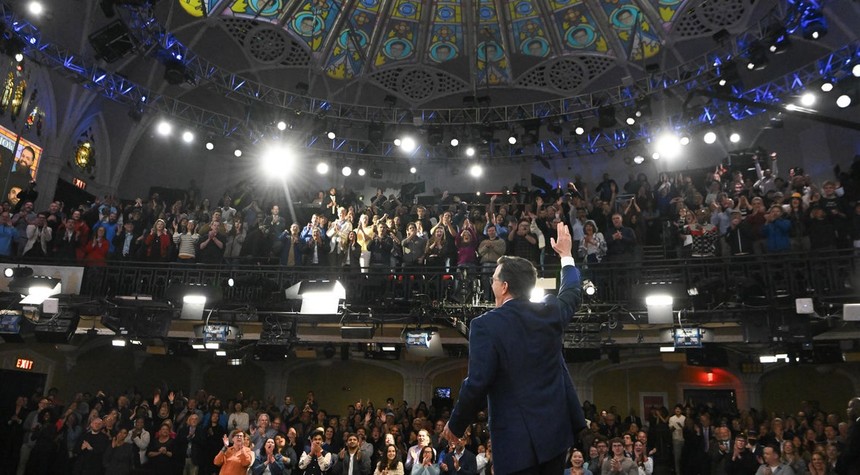
Stephen Colbert brought down the curtain on “The Late Show” Thursday evening, marking the end of a 33-year franchise that has been a fixture of American late-night television. The comedian and host, who helmed the program for its final eleven years, concluded more than 1,800 episodes with an extended finale that ran 17 minutes beyond the show’s standard hour-long format.
In his opening remarks, Colbert acknowledged the weight of history that accompanied his tenure at the Ed Sullivan Theater, the same venue that once hosted The Beatles’ American television debut in 1964. “There is so much history here in the Ed Sullivan Theater, and we’ve been honored to have been just a small part of it,” Colbert stated during his final monologue.
The host reflected on what he characterized as the program’s defining quality throughout his years at the helm. “We call it the joy machine, because to do this many shows, it has to be a machine,” Colbert explained. “But the thing is, if you choose to do it with joy, it doesn’t hurt as much when your fingers get caught in the gears.”
The evening featured appearances from numerous entertainment industry figures, including Jon Stewart, who previously hosted “The Daily Show” where Colbert served as a correspondent before launching his own programs. Additional guests included comedians Tig Notaro, actors Ryan Reynolds, Paul Rudd, and Bryan Cranston, as well as astrophysicist Neil deGrasse Tyson.
In what appeared to be a coordinated gesture of professional respect, Colbert’s fellow late-night hosts Jimmy Kimmel, Jimmy Fallon, Seth Meyers, and John Oliver joined him on stage for the finale. “We came to say we’re gonna miss you. Late night is not gonna be the same without you,” Kimmel remarked. Both Kimmel and Fallon elected to air rerun episodes in their respective time slots Thursday evening in acknowledgment of Colbert’s final broadcast.
The program concluded with a performance by Paul McCartney, whose appearance carried particular significance given his history with the venue. McCartney performed on the same Ed Sullivan Theater stage with The Beatles sixty-one years ago during their groundbreaking American television debut on February 9, 1964.
Prior to the broadcast, there had been speculation that Pope Leo XIV might appear as Colbert’s final guest. Colbert, known for his Catholic faith and previous meetings with church leadership, made light of the speculation by attempting to introduce the pontiff before a cast member informed him that Leo had declined to leave his dressing room.
Throughout his remarks, Colbert emphasized the relationships formed during his tenure. “I cannot adequately explain to you what the people who work here have done for each other and how much we mean to each other,” he said, speaking of the production staff and cast members who worked alongside him across more than a decade of nightly broadcasts.
The conclusion of “The Late Show” represents a significant shift in the landscape of American late-night television, ending more than three decades of continuous programming under the franchise banner.
Related: FBI Captures Fugitive in $90 Million Minnesota Healthcare Fraud Case
