
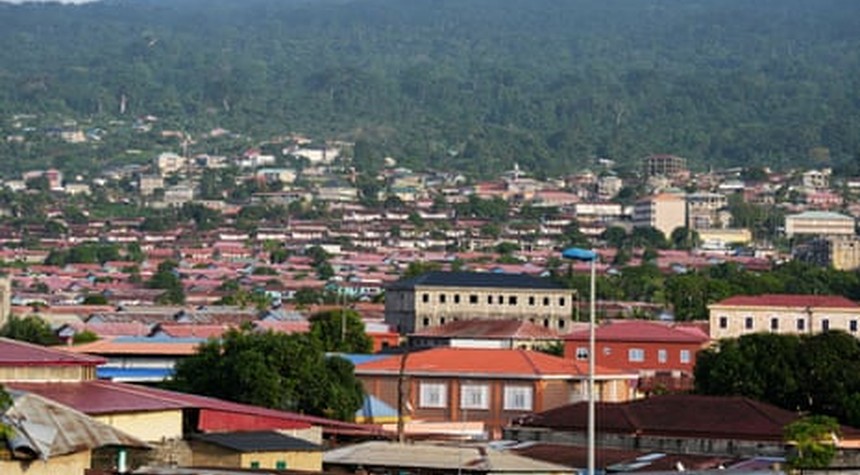
United Nations human rights experts have issued an uncommon public appeal to Equatorial Guinea, calling on the West African nation to prevent the forced return of American deportees to countries where they face threats of political violence, torture, and death.
The statement, which carries the endorsement of a representative from the African Commission on Human and People’s Rights, places diplomatic pressure on Equatorial Guinea to uphold international human rights standards. The experts specifically warned against refoulement, the practice of expelling individuals to nations where they face persecution.
“States must ensure that no one is returned, directly or indirectly, to a situation where their life, freedom or physical or mental integrity would be in danger,” the experts stated Wednesday.
The Trump administration has negotiated agreements with numerous countries to accept deportees from the United States as part of the president’s mass deportation initiative. Under one such arrangement, the United States provided Equatorial Guinea with $7.5 million to accept third-country nationals who had previously received protections against expulsion to their homelands due to persecution risks.
According to reports from deportees currently held in Equatorial Guinea, security officials have presented nine individuals with salvo-conductos, temporary travel documents, and informed them of imminent deportation to their countries of origin.
Tutu Alicante, director of Equatorial Guinea Justice, a human rights organization, offered a stark assessment of the situation. “Equatorial Guinea should never be treated as a safe country for migrants or asylum seekers. This is a highly repressive authoritarian state,” Alicante stated. “Vulnerable migrants are being transferred into a country where they have no legal status, no family networks, and no meaningful protection mechanisms.”
A deportee identified only as Esther, who arrived in Malabo, the capital of Equatorial Guinea, several weeks ago, described conditions at her detention facility as comparable to a prison. She and other deportees have reportedly been held without access to basic hygiene items including soap, toothbrushes, or clean clothes.
“I have cried. I have struggled. I have done everything,” Esther said during a telephone conversation from the hotel room where she remains confined. “I have fought and fought. Now I don’t have anything left in me.”
Esther, whose real identity and country of origin are being withheld for safety reasons, is from a West African nation. She stated that she fled her homeland under circumstances that led American authorities to initially grant her protections against return.
The situation raises significant questions about the implementation of the administration’s deportation policies and the vetting of countries selected to receive deportees. Equatorial Guinea, ruled by President Teodoro Obiang Nguema Mbasogo since 1979, has long been identified by international human rights organizations as one of the world’s most repressive governments.
The United Nations appeal represents an unusual step in international diplomacy, as such public statements are typically reserved for situations of grave concern. The involvement of the African Commission on Human and People’s Rights adds regional weight to the international pressure on Equatorial Guinea to comply with established human rights protocols.
As this situation develops, it underscores the complex intersection of immigration enforcement, international agreements, and human rights obligations that must be carefully balanced in deportation proceedings.
Related: New Museum Exhibit Preserves September 11th Memory for Generation Born After Attacks
