
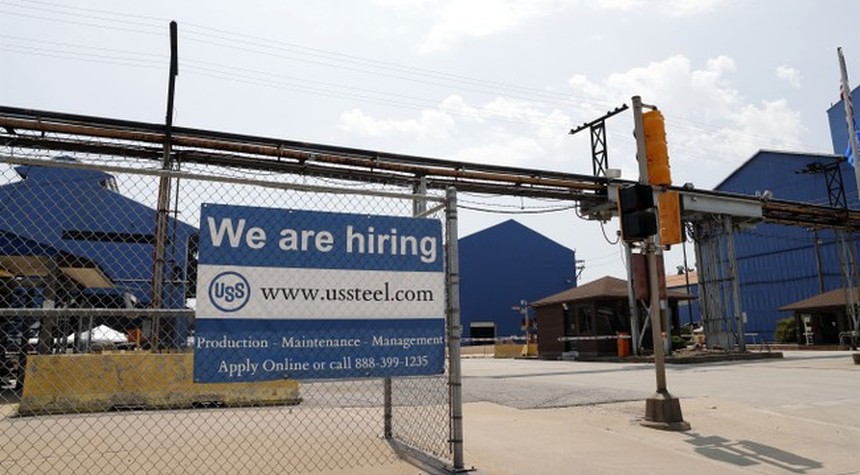
United States Steel announced last week its decision to restart operations at the Gary Tin Mill in Gary, Indiana, a move that will restore domestic tin production capacity and create 225 manufacturing jobs in the heart of America’s industrial corridor.
The facility, located at the company’s Gary Works complex in northwest Indiana, has been positioned to increase the nation’s domestic tin mill production and provide American customers with domestically sourced supply. The restart represents a significant development for the region, which has witnessed decades of industrial decline as manufacturing operations moved overseas or shuttered entirely.
The company’s decision hinges on sustained customer interest in securing long-term domestic tin mill supply. United States Steel has expressed confidence that demand can be met through increased domestic production when market conditions permit fair competition. The restart is designed to provide customers with greater access to reliable, American-made tin mill products that are mined, melted, and manufactured entirely within the United States, contributing to a more balanced domestic supply mix.
Tin serves critical functions in various industrial applications, most notably in preventing corrosion in steel products. The metal is applied as a protective coating through either electrolytic processes or hot dipping methods. Beyond corrosion prevention, tin finds use in numerous other applications across American industry. The expansion of domestic production capacity addresses supply chain vulnerabilities that have become increasingly apparent in recent years.
The Gary Works facility stands as part of the broader Rust Belt region, an area that has borne the brunt of American deindustrialization over the past several decades. The return of manufacturing operations to this area represents a reversal of long-standing trends that have devastated communities throughout the industrial Midwest.
Local officials from both sides of the political aisle have welcomed the announcement. Gary Mayor Eddie Melton characterized the restart as “a great step forward for our city, our local workforce, and the broader American manufacturing industry.” The bipartisan support reflects the economic realities facing communities like Gary, where manufacturing jobs have historically provided middle-class wages and stable employment for generations of workers.
The facility is expected to become fully operational in early 2025, contingent upon market conditions and sustained customer commitments. The timeline provides the company with sufficient preparation for workforce recruitment, equipment modernization, and supply chain coordination necessary for resuming full-scale production.
For northwest Indiana, the restart represents more than merely the return of 225 jobs. It signals potential renewed confidence in American manufacturing capabilities and the viability of domestic production in industries long dominated by foreign competitors. Whether this development marks the beginning of broader industrial revival in the region remains to be seen, but for Gary and its surrounding communities, the news provides a measure of economic hope that has been in short supply for far too long.
Related: California Regulators Cancel Long Beach Fireworks Show That Raised $2 Million for Children
