
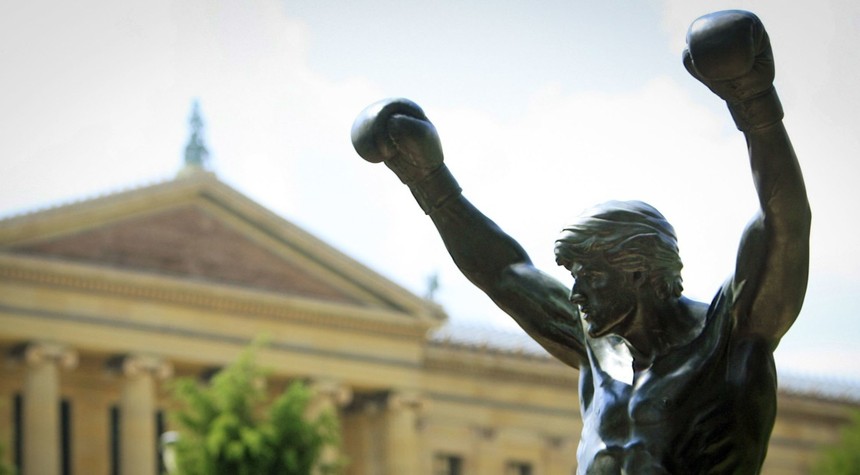
Workers removed the bronze statue of Rocky Balboa from its longtime position outside the Philadelphia Museum of Art on Wednesday, relocating the iconic monument indoors where it will serve as the centerpiece of an exhibition commemorating fifty years since the beloved film’s release.
The massive bronze sculpture represents one of three identical statues inspired by Sylvester Stallone’s celebrated film franchise, all situated at various locations throughout Philadelphia. This particular statue holds special significance as the very piece featured in a memorable scene from “Rocky III,” where the fictional boxer confronts his challenger Clubber Lang, portrayed by Mr. T.
The relocation marks the beginning of significant changes to Philadelphia’s Rocky-related monuments this year. A second statue, owned by Stallone himself, currently stands at the top of the museum’s famous steps and remains accessible to the public at no charge. That statue will be returned to Stallone later this year, and the statue moved on Wednesday will take its place after the exhibition concludes.
The upcoming exhibition, titled “Rising Up: Rocky and the Making of Monuments,” represents the museum’s recognition of the cultural impact these statues have had on Philadelphia’s identity. The original “Rocky” film, released in 1976, transformed the museum’s steps into one of America’s most recognizable landmarks, drawing millions of visitors who recreate the protagonist’s triumphant climb.
The statue’s journey reflects the complicated relationship between popular culture and civic monuments. What began as a movie prop has evolved into a permanent fixture of Philadelphia’s cultural landscape, prompting ongoing debates about the intersection of entertainment and public art.
Museum officials have not disclosed the exhibition’s duration or whether the statue will remain indoors permanently after the show concludes. The exhibition will explore how fictional characters can become enduring symbols of a city’s character and aspirations.
Philadelphia has embraced its connection to the Rocky franchise for decades, with the statue serving as a major tourist attraction. Visitors from around the world make pilgrimages to the museum steps, often running up them while raising their fists in imitation of the film’s most iconic moment.
The relocation required careful planning and execution, given the statue’s substantial weight and the need to preserve both the artwork and the museum grounds. The bronze figure depicts Balboa in his characteristic victory pose, arms raised triumphantly above his head.
This transition underscores the evolving nature of public monuments and how cities choose to honor both historical figures and cultural touchstones. The decision to bring Rocky indoors for a formal exhibition elevates the statue from street attraction to curated art piece, acknowledging its role in American popular culture.
The third identical statue remains at an undisclosed location in Philadelphia, though it receives considerably less attention than its more prominently positioned counterparts.
Related: Resort Fees Continue to Burden American Travelers Despite New Federal Transparency Rules
