
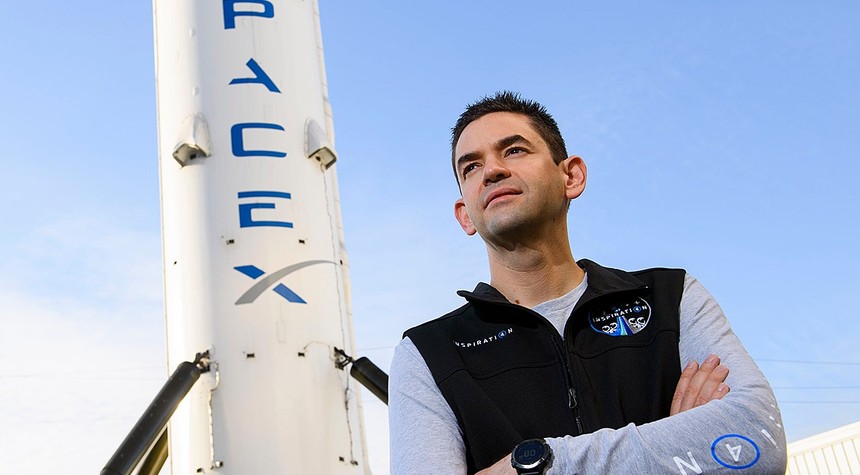
NASA Administrator Jared Isaacman has confirmed that the space agency will launch three separate missions to the Moon before the conclusion of President Donald Trump’s second term, marking an ambitious acceleration of America’s return to lunar exploration.
In a detailed interview this week, Isaacman outlined the timeline for the Artemis program and addressed recent scheduling adjustments to the Artemis II mission. The administrator emphasized that the agency has not delayed its objectives but rather expanded them to fulfill the administration’s directive of establishing a permanent American presence on the Moon.
“To be overwhelmingly clear, we did not stretch out our timeline or delay anything,” Isaacman stated. “What we did is insert additional missions, standardized, so we can actually achieve the national policy that President Trump set out to return American astronauts to the Moon, and build an enduring presence to stay.”
The announcement represents a significant commitment to space exploration, with Artemis IV and Artemis V specifically designated as missions that will return astronauts to the lunar surface. This would mark the first time American astronauts have walked on the Moon since the Apollo program concluded more than fifty years ago.
According to Isaacman, the Artemis II mission will launch within weeks and will conduct a circumlunar flight, taking astronauts around the Moon without landing. This mission serves as a critical test of systems and procedures before subsequent missions attempt lunar landings.
The Artemis III mission, scheduled to launch by mid-term, will build upon the data and experience gained from Artemis II. The subsequent missions, Artemis IV and V, will focus on establishing the infrastructure necessary for sustained lunar operations.
The accelerated timeline reflects the Trump administration’s prioritization of space exploration and American leadership in the new space race. With other nations, particularly China, advancing their own lunar programs, the United States faces renewed competition in space exploration for the first time since the Cold War era.
The Artemis program represents the most ambitious American space initiative since the original Moon landings. Beyond simply returning to the lunar surface, the program aims to establish a sustainable presence that could serve as a launching point for future missions to Mars and deeper into the solar system.
NASA’s approach involves developing new technologies and systems that can support long-term habitation and scientific research on the Moon. The agency has been working with commercial partners to develop landing systems, habitats, and other infrastructure necessary for sustained operations.
The timeline announced by Isaacman places significant pressure on NASA and its contractors to meet aggressive deadlines while maintaining the safety standards essential for human spaceflight. The agency has faced scrutiny in recent years over delays and cost overruns in various programs, making the successful execution of this timeline crucial for maintaining public and political support.
As America prepares to return to the Moon, the nation stands at a pivotal moment in space exploration history. The success of these missions will determine not only American leadership in space but also the feasibility of humanity’s long-term aspirations beyond Earth.
Related: Detroit Lions Cornerback Linked to Alleged Kidnapping Plot in Florida
