
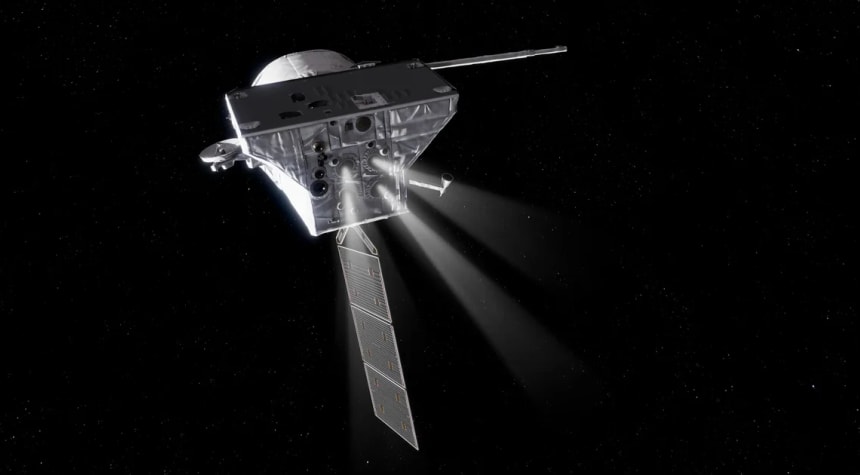
A joint European and Japanese spacecraft has successfully entered orbit around Mercury after an eight-year journey through the solar system, though not without encountering significant technical difficulties that tested the resolve of mission controllers.
BepiColombo, launched in October 2018 as a collaborative effort between the European Space Agency and the Japan Aerospace Exploration Agency, completed its critical orbital insertion maneuver on November 21. The spacecraft utilized four axial thrusters to slow its velocity sufficiently to be captured by Mercury’s gravitational field, passing within 400 miles of the planet’s scorched surface.
The maneuver began as planned with a brief, scheduled loss of contact with the mission control team at the European Space Operations Center in Darmstadt, Germany. However, when communications were reestablished, controllers discovered the spacecraft had entered safe mode, a protective state in which all nonessential activities cease.
Analysis of trajectory data revealed that BepiColombo had completed only seventy-seven percent of the planned thruster burn, which was scheduled to last approximately thirty-seven minutes. The incomplete maneuver was traced to a software issue involving attitude guidance and thruster control systems. An investigation into the precise cause of this error continues.
Ignacio Tanco, flight operations director for the BepiColombo mission, described the moment of discovery as galvanizing for the entire team. The focus immediately shifted to understanding what had occurred and determining whether the mission could proceed.
Despite the abbreviated burn, mission scientists were ultimately able to confirm that BepiColombo had indeed been captured by Mercury’s gravity. The confirmation process required six hours from the initial maneuver start time, a period that undoubtedly tested the patience and nerves of those monitoring the mission.
In the coming weeks, the spacecraft will execute a series of smaller thruster burns to refine its orbit around Mercury. Each adjustment will be calculated by the flight dynamics team based on the spacecraft’s actual position and trajectory, allowing controllers to guide BepiColombo to what mission planners describe as the optimum orbital position. The process has been compared to braking an automobile at precisely the right moment to reach a desired destination. This approach also maximizes the spacecraft’s remaining fuel supplies.
On December 9, BepiColombo will release two independent science orbiters that will conduct separate but complementary research programs.
The European Space Agency’s Mercury Planetary Orbiter will spend several additional months maneuvering into its final orbit, with science operations scheduled to begin in April 2027. This orbiter will focus on studying Mercury’s interior structure, surface composition, and the immediate space environment surrounding the planet.
The Japan Aerospace Exploration Agency’s Mercury Magnetospheric Orbiter will investigate the planet’s magnetosphere, interplanetary dust, and electric fields. These investigations are expected to provide crucial data about the smallest and least understood planet in our solar system.
Mercury presents unique challenges for spacecraft operations due to its proximity to the Sun and extreme temperature variations. The successful insertion of BepiColombo into orbit, even with complications, represents a significant achievement in planetary exploration and international scientific cooperation.
Related: Measles Claims Another Life in Pennsylvania Amid Growing Health Crisis