The United States Justice Department has mounted what officials are calling the most extensive anti-fraud enforcement operation in the agency’s history, resulting in charges against more than 800 defendants and the recovery of over $8 billion in funds targeted for theft from American victims.
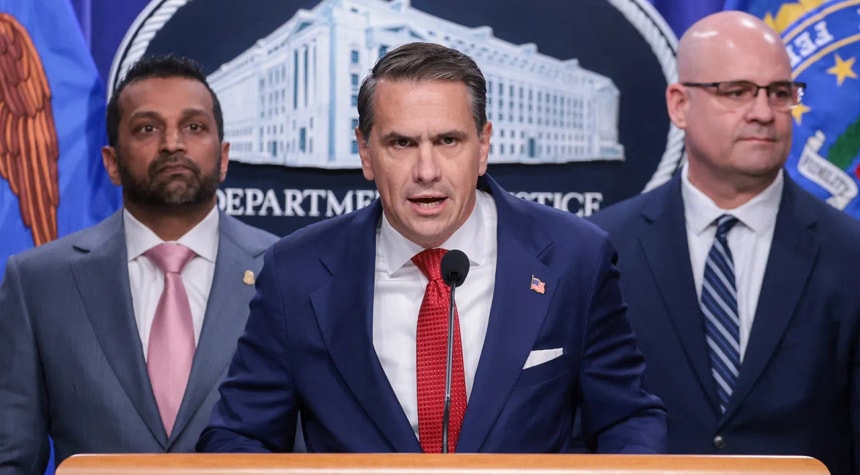
Attorney General Todd Blanche announced the results of this unprecedented enforcement surge during a news conference in Washington on Tuesday, joined by FBI Director Kash Patel. The operation follows President Trump’s executive order issued in March directing federal agencies to intensify efforts against fraud and predatory schemes affecting American citizens.
Since that presidential directive, the Justice Department has filed more than 400 criminal cases spanning 85 federal districts nationwide. These cases have produced charges, extraditions, guilty pleas, and prison sentences. According to Blanche, the scope of the operation extends beyond individual criminals to target the organizational infrastructure supporting these illicit activities.
The FBI’s contribution to this effort, designated Operation Blackout, represents a coordinated international campaign against fraud syndicates operating across multiple continents. Director Patel reported that federal agents, working alongside international partners, have seized nearly $17 billion in illicit funds, confiscated more than 14,000 digital devices, and dismantled 29 fraudulent operations centers located across four continents.
These operations centers function as self-contained facilities where criminal organizations reportedly compel human trafficking victims to execute online fraud schemes targeting Americans. Joint law enforcement operations have resulted in the rescue of more than 2,200 trafficked workers from these locations. Patel indicated that when criminal networks attempted to relocate their operations from Southeast Asia to Africa and the Middle East, federal authorities pursued them across every continent where they established operations.
The enforcement campaign addresses a problem of considerable magnitude. Officials cited recent research indicating that 10 percent of Americans reported that either they or a household member fell victim to a scam in 2025, with estimated losses totaling $68 billion in a single year.
The schemes disrupted since March demonstrate considerable variety and sophistication. Federal authorities have encountered cases ranging from incarcerated felons using contraband cellular phones and handwritten scripts to conduct jury duty extortion scams to timeshare fraud operations in Mexico allegedly connected to major drug trafficking organizations.
Recent enforcement actions illustrate the breadth of the campaign. Within the past two weeks, federal authorities collaborated with Mexican officials to extradite an individual accused of selling the personal information of more than one million elderly Americans to international scam networks, resulting in at least $15 million in victim losses. Agents also shut down websites impersonating United States federal courts and arrested nine suspects in an alleged sweepstakes scheme that defrauded senior citizens of millions of dollars.
International cooperation has produced significant results. A recent enforcement operation coordinated in London produced 28 arrests across Africa, $11 million in seized assets, the rescue of 120 trafficked workers, and the removal of 3.7 million fraudulent accounts from social media platforms.
Federal officials have also implemented preventive measures through Operation Level Up, a collaborative effort with the United States Secret Service. This program has prevented nearly $700 million in potential losses affecting 11,000 targeted Americans, 77 percent of whom were unaware they were being subjected to fraudulent schemes.
The scale and coordination of this enforcement campaign represent a substantial commitment of federal resources to protect American citizens from financial predation, regardless of where the perpetrators may be located.
Related: Man’s Body Recovered from Waters Adjacent to Long Beach’s Queen Mary