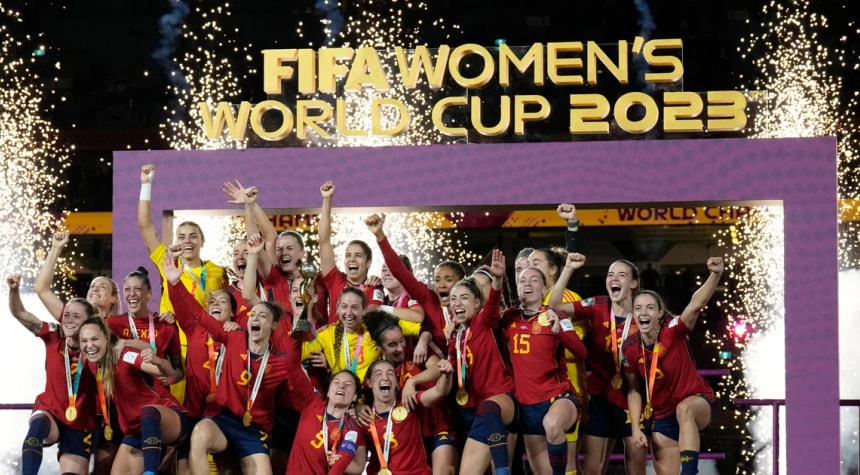
The United States will host the Women’s World Cup once again, as FIFA confirmed Monday that America will lead a four-nation coalition to stage the 2031 tournament. Mexico, Costa Rica, and Jamaica join as co-hosts in what organizers promise will be the largest women’s sporting event in history.
The decision marks a significant expansion for the women’s game. For the first time, the Women’s World Cup will feature 48 teams competing across 104 matches, bringing it to parity with the men’s tournament, which adopted the expanded format this year. The 2027 Women’s World Cup in Brazil will maintain the current 32-team structure, making 2031 the watershed moment for the sport’s global reach.
FIFA approved the bid by acclamation during an online meeting of its 211 member federations. The vote followed a lengthy evaluation process that awarded the United States-led proposal a score of 4.4 out of 5, noting that the bid exceeded minimum hosting requirements in all technical categories.
Cindy Parlow Cone, president of the United States Soccer Federation, addressed FIFA members in Zurich before the vote with a clear acknowledgment of the responsibility ahead. The proposed tournament will utilize stadiums across 20 cities, with 14 venues in the United States, four in Mexico, and one each in Costa Rica’s San José and Jamaica’s Kingston.
American cities included in the proposal span from coast to coast. Atlanta, Charlotte, Dallas, Denver, Houston, Kansas City, Los Angeles, Minneapolis, and Nashville are among the host cities, alongside MetLife Stadium in New Jersey, which served as the venue for the men’s World Cup final in July. Each location brings established infrastructure and proven capacity for managing major international sporting events.
The United States previously hosted the Women’s World Cup in 1999 and 2003, both times as the sole host nation. The American women’s national team claimed victory on home soil in 1999, the second of its four World Cup titles, in a tournament that remains a touchstone moment for women’s soccer in this country.
In a concurrent decision Monday, FIFA awarded the 2035 Women’s World Cup to a United Kingdom bid led by England and including Northern Ireland, Scotland, and Wales. That tournament will mark England’s first time hosting since the men’s World Cup in 1966, when England claimed its only world championship. The UK proposal offers 19 potential venues, including London’s Wembley Stadium.
FIFA President Gianni Infantino emphasized that revenue from these expanded tournaments will be reinvested entirely into women’s soccer development. The governing body projects both the 2031 and 2035 tournaments to be commercially successful, leveraging established markets and passionate fan bases across host nations.
The approval process notably lacked competing bids. For the second time in two years, FIFA has confirmed World Cup hosts without opposition, following a similar pattern established with the 2030 and 2034 men’s tournaments. This approach provides long-term clarity for FIFA’s planning but has drawn questions about the competitive bidding process that traditionally characterized World Cup hosting decisions.
The 2031 tournament arrives at a pivotal moment for women’s soccer. Investment in the sport has grown substantially, television audiences have expanded, and professional leagues have gained stability. Whether this tournament delivers on its promise to be the largest women’s sporting event in history will depend not only on attendance and viewership, but on the lasting impact it creates for the next generation of players and fans.
Related: President Intervenes in Nvidia Leadership Crisis as Board Reinstates Jensen Huang