
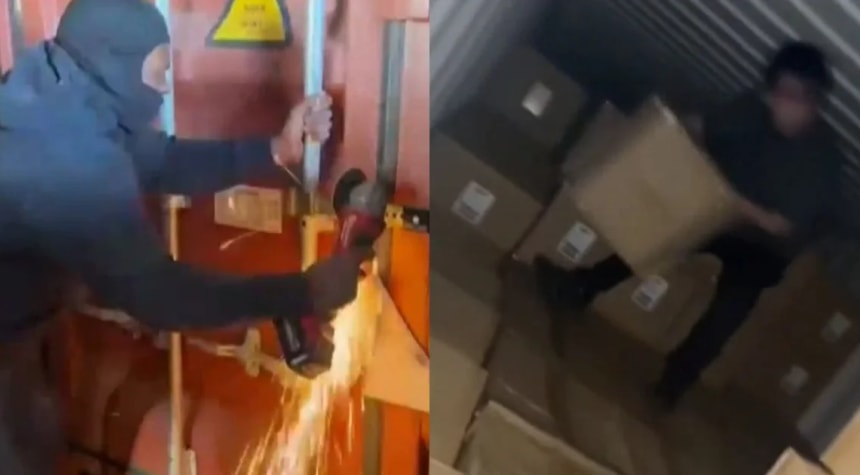
Federal prosecutors have announced the arrest of fourteen men in connection with an extensive freight train theft operation that netted more than $22 million in stolen merchandise across Southern California. The arrests, following a fourteen-month investigation, represent what law enforcement officials are calling one of the most brazen cargo theft rings in the region’s history.
The alleged thieves targeted at least three dozen freight trains over a period exceeding two years, making off with Nike sneakers, electronics, power tools, and other high-value merchandise. What distinguishes this case from typical cargo theft operations is the remarkable audacity of the perpetrators, who coordinated their criminal activities through Instagram and filmed nearly every step of their robberies.
The videos, now serving as evidence in the prosecution, show suspects sawing into cargo containers atop moving trains, multiple individuals transferring stolen goods, and at least one man posing for the camera while the theft unfolds around him. The suspects employed a sophisticated method of boarding moving trains, then cutting air hoses or brake hoses to force emergency stops before hauling the stolen merchandise to nearby stash houses. The goods were subsequently sold on the black market.
Los Angeles County District Attorney Nathan Hochman has characterized the case as "the granddaddy of all train cargo theft prosecutions" in Los Angeles County. The defendants face serious federal charges including conspiracy, theft of interstate railroad cargo, possession or receipt of stolen interstate railroad cargo, and violence against railroad carriers.
LAPD Deputy Chief Alan Hamilton noted the irony inherent in the case, observing that criminal investigations become considerably easier when suspects document their own illegal activities on social media platforms.
This California case represents only a fraction of a much larger national crisis. The Federal Bureau of Investigation has estimated that cargo theft losses in the United States and Canada reached nearly $725 million last year, reflecting a troubling sixty percent increase from the previous year. The Department of Homeland Security places the annual cost of cargo theft to the United States economy between $15 billion and $35 billion.
These thefts have consequences that extend far beyond immediate financial losses to railroad companies and shippers. Law enforcement officials emphasize that such criminal activity disrupts supply chains, creating delivery delays for customers and contributing to higher prices across the board.
In response to the escalating threat, law enforcement agencies nationwide have intensified their efforts to combat organized cargo theft. This past October, federal agents, railroad police, and law enforcement personnel from more than two dozen states participated in a coordinated national operation targeting thieves who prey on cargo trains.
The operation employed sophisticated infrared drone technology to track heat signatures along train tracks and in rail yards. Commander Michael Ware, who leads the Cook County Sheriff’s Police Organized Retail Crime and Cargo Theft Task Force, described the technology as a game-changing tool that provides law enforcement with critical advantages in both apprehension and evidence collection.
In one instance captured by drone footage, two men were recorded breaking seals on a cargo container holding $35,000 worth of electronics. Commander Ware noted that suspects often deny their involvement until confronted with the drone evidence, at which point many acknowledge their guilt.
The combination of traditional investigative work and advanced surveillance technology appears to be yielding results, but the scale of the problem suggests that cargo theft will remain a significant challenge for law enforcement and the transportation industry for the foreseeable future.
Related: Police Seek Suspect in Reported Attack on NYU Student
