
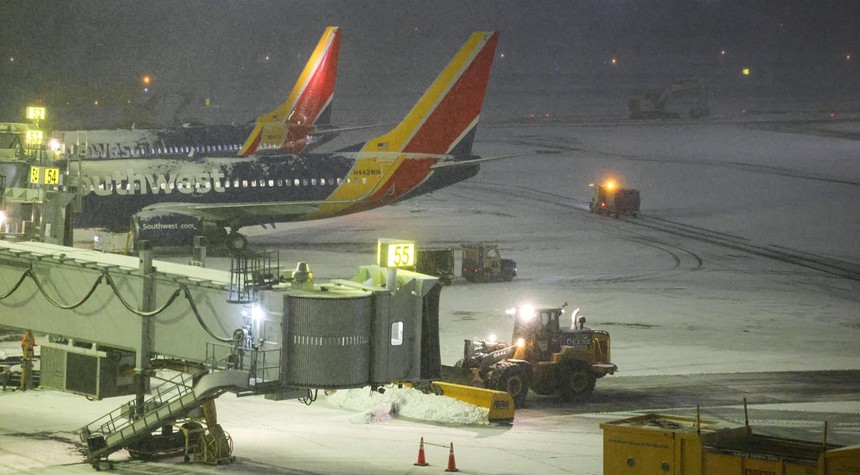
A powerful winter storm sweeping across the United States has forced airlines to cancel more than 10,000 domestic flights on Sunday, marking the most severe single-day disruption to air travel since the onset of the COVID-19 pandemic.
The cancellations represent more than double the number of flights grounded on Saturday, according to data from flight-tracking service FlightAware. Airlines have already canceled an additional 1,800 flights scheduled for Monday as the storm system continues its march across the nation.
The National Weather Service reports that the storm is delivering widespread heavy snow, sleet, and freezing rain from the Southern Rockies through New England, with hazardous conditions expected to persist through Monday. The scope and severity of the weather system has left few major aviation hubs unaffected.
Ronald Reagan National Airport in the nation’s capital has suspended all flight operations for Sunday. Airport officials issued a direct advisory urging travelers to remain home and avoid the icy roads while checking with their airlines for rebooking options. LaGuardia Airport in New York similarly warned passengers to expect significant travel impacts from the storm.
The disruptions have extended well beyond the Northeast corridor. In North Texas, both major airports experienced mounting cancellations even before the storm’s arrival. Dallas Fort Worth International Airport announced that airlines would operate only a reduced flight schedule on Sunday, with officials cautioning that schedules remained subject to change as conditions evolved.
Airport operations teams in Dallas have been actively treating roads, bridges, and airfield surfaces to maintain safe conditions for the limited operations continuing during the storm. The airport encouraged all passengers to verify their flight status directly with their carriers.
Major aviation centers in Atlanta, Charlotte, and Philadelphia are likewise bracing for substantial operational disruptions as the storm system progresses. Flight tracking services indicate that American Airlines has been the most severely impacted carrier during this weekend’s weather event.
The widespread cancellations have stranded thousands of travelers across the country, many of whom face uncertain rebooking prospects as airlines struggle to accommodate displaced passengers while operating reduced schedules. The cascading effects of such large-scale disruptions typically extend several days beyond the initial weather event as carriers work to reposition aircraft and crews.
Aviation experts note that airlines have become increasingly cautious about preemptive cancellations in recent years, opting to ground flights well in advance of severe weather rather than risk stranding aircraft and passengers at affected airports. While frustrating for travelers, this approach generally allows for more orderly rebooking processes and reduces the likelihood of passengers being trapped in airport terminals during extended delays.
The current storm system serves as a stark reminder of winter’s capacity to paralyze the nation’s transportation infrastructure, despite advances in forecasting and preparation. Travelers with upcoming flights are advised to monitor conditions closely and maintain direct contact with their airlines regarding flight status.
Related: White House to Detail New Tax-Advantaged Retirement Accounts for Children
