
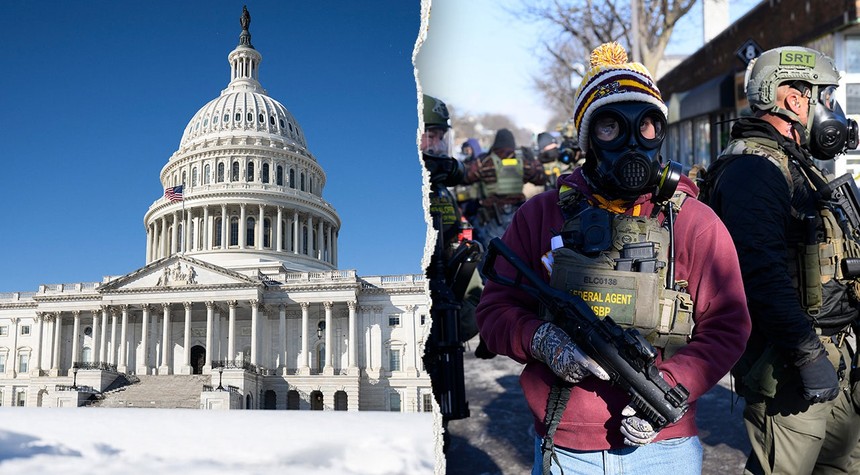
The White House and congressional Democrats remain at an impasse over funding for the Department of Homeland Security, with former agency leaders warning that Democratic demands represent an unprecedented level of congressional interference in the department’s operations.
White House Press Secretary Karoline Leavitt stated clearly that the administration expects the Senate to pass DHS funding as part of a comprehensive appropriations package alongside several other departments, as originally planned. Democrats, however, are insisting the homeland security funding be separated from the broader bill and subjected to additional restrictions.
This standoff carries significant implications for an agency that has operated with considerable autonomy since its creation in the aftermath of the September 11th attacks. The Department of Homeland Security was established to provide flexibility and rapid response capability in protecting the nation from evolving threats. Now, more than two decades later, that operational independence faces its most serious challenge from Capitol Hill.
John Sandweg, who served as acting director of Immigration and Customs Enforcement and as general counsel for DHS, provided important historical context. He noted that while Congress has occasionally issued directives to ICE, lawmakers have traditionally refrained from micromanaging the agency’s day-to-day operations. According to Sandweg, previous congressional involvement typically came through appropriations language or authorizing statutes that established broad frameworks rather than operational mandates.
Sarah Saldaña, who directed ICE during a previous administration, shares concerns about the scope of congressional intervention being proposed. The guardrails Democrats are demanding would fundamentally alter the relationship between the legislative branch and homeland security operations.
The facts are straightforward. The Department of Homeland Security requires funding to continue its mission of protecting American borders, investigating criminal enterprises, and coordinating national security efforts across multiple agencies. The debate centers not on whether to fund these operations, but on what conditions Congress should attach to that funding.
Democrats argue that new oversight mechanisms are necessary to ensure accountability and prevent what they characterize as overreach. The White House maintains that existing congressional oversight tools are sufficient and that the proposed restrictions would hamper the agency’s ability to respond effectively to threats.
Former agency leaders from both political parties have expressed concern that excessive congressional involvement in operational decisions could create dangerous inefficiencies. The Department of Homeland Security coordinates activities ranging from border security to cybersecurity, from disaster response to counterterrorism. These responsibilities require the ability to adapt quickly to changing circumstances.
As this funding dispute continues, the American people deserve to understand what is at stake. This is not simply a budgetary disagreement. It represents a fundamental question about how the nation’s homeland security apparatus should function and who should control its operations.
The Senate now faces a clear choice: pass the comprehensive funding package as structured, or accede to Democratic demands for separation and additional restrictions. That decision will shape not only the immediate future of homeland security funding, but potentially the balance of power between Congress and executive agencies for years to come.
Related: Silver Medalist Opens Up About Depression After Sochi Olympics Success