
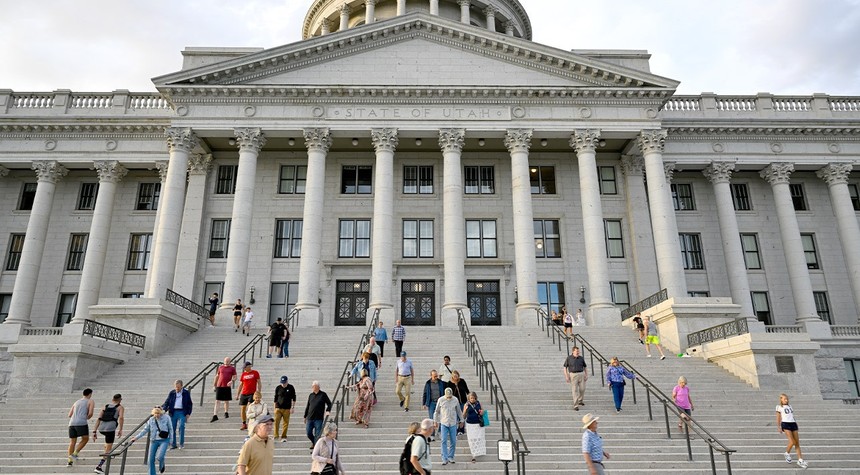
Two members of Utah’s congressional delegation have taken the extraordinary step of filing a federal lawsuit against their own state’s election official, challenging the constitutional authority of a judge to impose new congressional district boundaries.
Representatives Celeste Maloy and Burgess Owens filed the 31-page complaint on Monday, joined by several county commissioners and other elected officials. The lawsuit targets what has become known as “Map 1,” a redistricting plan that a state judge ordered into effect after rejecting maps drawn by the Utah Legislature.
At the heart of this legal challenge lies a fundamental question about the separation of powers and the constitutional framework governing American elections. The plaintiffs argue that Judge Dianna Gibson overstepped her judicial authority by discarding the legislature’s redistricting plan and substituting her own preferred map, one that was drafted by attorneys and experts retained by advocacy groups rather than elected representatives.
The lawsuit invokes the Elections Clause of the United States Constitution, which grants state legislatures the primary authority to determine the “times, places and manner” of congressional elections. The Republican lawmakers contend that this constitutional provision leaves no room for judicial intervention of the kind Judge Gibson exercised.
According to the complaint, the court-imposed map tilts Utah’s House delegation in favor of Democratic candidates, a significant concern in a state where Republicans have traditionally held strong electoral advantages. The plaintiffs maintain that such a consequential political decision should rest with elected legislators who are accountable to voters, not with judges or outside advocacy groups.
This legal battle reflects a broader national debate about redistricting authority that has played out in courtrooms across the country. The question of who draws congressional district lines has become increasingly contentious, with Democrats and Republicans alike seeking favorable maps through various means, including litigation.
The Utah case presents a particularly clear test of competing theories about redistricting power. On one side stand those who argue that courts must intervene when legislatures produce maps that violate state or federal law. On the other side are those who maintain that the Elections Clause grants legislatures nearly unfettered authority, with limited room for judicial review.
The timing of this lawsuit carries significant implications for Utah’s upcoming congressional elections. If the plaintiffs prevail, the state would presumably revert to district lines drawn by the legislature, potentially altering the competitive landscape for multiple House seats.
The outcome may also influence redistricting disputes in other states, particularly if the case reaches the Supreme Court. The high court has shown interest in questions about the scope of legislative authority over elections, though it has thus far declined to impose strict limits on partisan gerrymandering.
For now, Utah voters and candidates face uncertainty about which map will govern future elections, as this constitutional challenge works its way through the federal court system.
Related: Two States Sue Trump Administration as Hudson River Rail Project Faces Shutdown
