
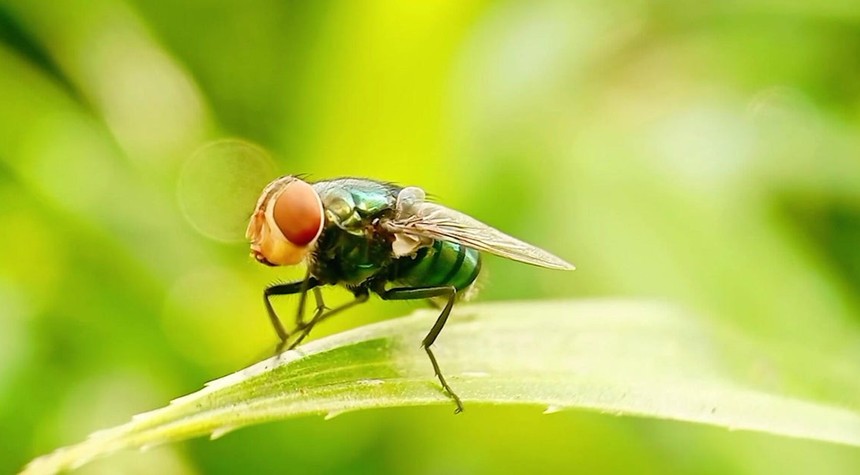
The United States Department of Agriculture has confirmed the presence of New World screwworm in a three-week-old calf in Zavala County, Texas, marking a troubling development in what federal officials had hoped to keep as a closed chapter in American agriculture.
The confirmation comes after samples taken from calves at a cattle ranch in La Pryor, a small community in southwest Texas located approximately fifty miles from the Mexican border, tested positive at the USDA’s National Veterinary Services Laboratories in Ames, Iowa. La Pryor sits in an agricultural region where livestock operations form the backbone of the local economy.
This represents the first confirmed case of the flesh-eating parasite on American soil in decades, following an aggressive eradication campaign that successfully eliminated the pest from the United States in the latter half of the twentieth century. The screwworm, a parasitic fly whose larvae feed on the living tissue of warm-blooded animals, was once a scourge to American ranchers before its elimination through a sustained scientific effort.
The detection follows closely on the heels of a confirmed case discovered just last week in Mexico’s Coahuila state, a mere twenty-five miles from the United States border. That case involved a five-year-old goat and represented the closest encounter to American territory since at least last September, according to federal tracking data.
The situation in Mexico has grown increasingly concerning. United States officials have documented thirty-two cases of the parasitic fly throughout Coahuila state, which shares a border with southwestern Texas. Nineteen of those cases remain active. Across Mexico as a whole, at least 26,216 screwworm cases have been identified, with upward of 2,700 cases still active, the USDA reports.
Representative Don McLaughlin of Texas has pledged full cooperation with authorities at all levels of government. The congressman emphasized the severity of the threat and committed to working alongside local, state, and federal agencies to combat what he termed a potential agricultural crisis.
The USDA has activated personnel on the ground and established coordination with local partners to contain any potential spread. The department maintains a monitoring system that provides updates twice weekly on any new cases detected within four hundred miles of the United States border in Mexico.
Federal officials had previously maintained that the current risk to livestock, other animals, and people in the United States remained very low. However, recent months have seen the parasite appearing closer to American territory than at any point in recent memory. In April, Texas Agriculture Commissioner Sid Miller announced that screwworm had been found at a location in Mexico just sixty miles from the United States border.
The New World screwworm poses significant risks to livestock operations and can affect pets, wildlife, and even humans if left unchecked. The parasite’s larvae infest open wounds on warm-blooded animals, feeding on living tissue and potentially causing death if untreated. Texas officials have issued warnings to outdoor enthusiasts and ranchers to remain vigilant for signs of infestation.
The confirmation of this case will likely prompt intensified surveillance and prevention measures along the border region as authorities work to prevent the re-establishment of this dangerous pest on American soil.
Related: Federal Agents Dismantle Sophisticated Drug Tunnel Operation in San Diego
