
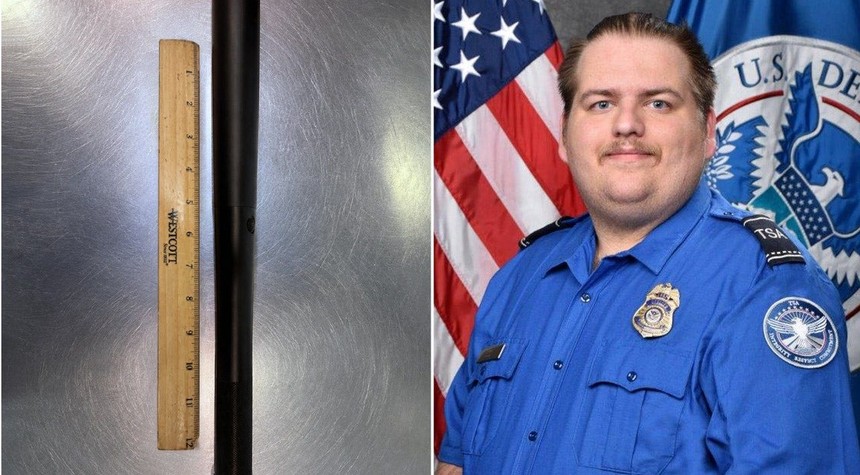
Transportation Security Administration officers at Tampa International Airport recently intercepted a passenger attempting to carry a concealed weapon through security screening, demonstrating once again the effectiveness of current airport security protocols and the vigilance of trained personnel.
The incident unfolded when TSA Officer Andrew Carter was conducting routine screening of carry-on baggage using standard X-ray equipment. Carter observed anomalies in what appeared to be a baseball bat-shaped flashlight among the passenger’s belongings. His trained eye detected irregularities in the item’s composition that warranted additional scrutiny.
“The makeup and composition of the flashlight appeared unusual and outside what I typically expect, so I determined it required further examination,” Carter explained in an official account published by the agency.
Following established security procedures, Carter flagged the bag for secondary inspection. Supervisory TSA Officer Michael Slaughter conducted the physical search and immediately detected something concealed beneath the bag’s lining. His examination revealed the baseball bat-shaped flashlight, which upon closer inspection showed a suspicious seam along its shaft.
When Slaughter investigated further, the handle detached from the flashlight body, exposing a four-inch double-edged knife integrated into the device. The weapon had been deliberately concealed within what appeared to be an innocuous novelty item.
When questioned by TSA personnel, the passenger initially claimed ignorance, stating he was unaware the item was in his possession. Such claims are not uncommon in security incidents of this nature, though they rarely alter the outcome of the investigation.
Former TSA official Keith Jeffries has weighed in on the incident, offering a straightforward warning to travelers who might consider attempting similar deceptions. Jeffries emphasized that modern security equipment and well-trained personnel make successful concealment of prohibited items virtually impossible.
The detection represents a textbook example of layered security working as designed. The X-ray technology provided the initial alert, while human judgment and experience translated that technological warning into action. The combination of advanced screening equipment and professional expertise remains the cornerstone of airport security operations across the nation.
This incident serves as a reminder that prohibited items remain strictly forbidden in aircraft cabins for the safety of all passengers and crew. Knives with blades exceeding the permitted length, particularly double-edged weapons designed for combat rather than utility purposes, represent serious security concerns.
The TSA continues to confiscate thousands of prohibited items annually at security checkpoints nationwide. While many passengers inadvertently pack forbidden items, authorities treat each incident seriously, as distinguishing between honest mistakes and deliberate attempts to circumvent security proves difficult in real-time screening situations.
Passengers face potential criminal charges, civil penalties, and additional screening procedures when caught attempting to bring weapons through security checkpoints. The consequences extend beyond immediate inconvenience, potentially affecting future travel and resulting in significant financial penalties.
The agency encourages travelers to review prohibited items lists before packing and to arrive at airports with adequate time for thorough security screening. Those uncertain about specific items should contact the TSA in advance or simply pack questionable objects in checked baggage, where different regulations apply.
And that is the way it is with airport security in America today.
Related: Washington Mystics Hand Indiana Fever 93-77 Defeat in Crucial Playoff Race Game
