
President Donald Trump stated unequivocally on Thursday that the United States must participate directly in selecting Iran’s next leader, a position unprecedented in modern American foreign policy but one the president insists is necessary to prevent recurring military confrontation.
The president’s remarks came less than a week after Operation Epic Fury commenced on Saturday, a comprehensive military campaign designed to eliminate Iran’s capacity to threaten American interests and those of Israel. That operation resulted in the death of Supreme Leader Ayatollah Ali Khamenei, confirmed by President Trump within twenty-four hours of the strikes.
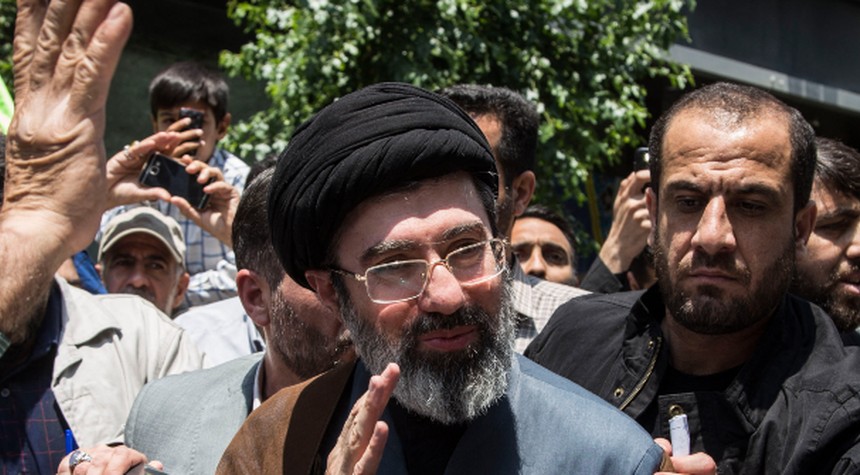
Now, as Iran’s Assembly of Experts convenes to select a successor, Trump has made clear that the United States will not stand as a passive observer. Reports suggesting the Assembly may choose Mojtaba Khamenei, the late ayatollah’s son, have drawn sharp criticism from the president, who dismissed the younger Khamenei as a “lightweight” and “unacceptable.”
“We want to be involved in the process of choosing the person who is going to lead Iran into the future, so we don’t have to go back every five years and do this again and again,” Trump explained. “We want somebody that’s going to be great for the people, great for the country.”
The president emphasized that America seeks a leader who will not perpetuate Iran’s role as the world’s foremost state sponsor of terrorism. For decades, Tehran has maintained an extensive network of terrorist organizations including Hamas, Hezbollah, the Yemeni Houthis, Palestinian Islamic Jihad, and various Shiite militias throughout Iraq. These groups have destabilized the Middle East and posed persistent threats to American personnel and allies.
Trump drew parallels to recent American involvement in Venezuela, where the arrest of dictator Nicolás Maduro on narco-terrorism charges led to Vice President Delcy Rodríguez assuming control. Despite her hardline communist background, Rodríguez has demonstrated willingness to cooperate with Washington, even welcoming the American Secretary of the Interior to Caracas this week.
“Khamenei’s son is unacceptable to me,” Trump stated. “We want someone that will bring harmony and peace to Iran.”
The president indicated that various candidates remain under consideration, including Reza Pahlavi, son of the former shah who ruled Iran before the 1979 Islamic Revolution. All potential leaders, Trump suggested, are “in the mix.”
In separate remarks, the president articulated a broader vision for Iran’s future, stating that America wants “to go in and clean out everything,” referring to the dismantling of the Islamic revolutionary government structure that has controlled Iran for more than four decades.
The Assembly of Experts, a body of senior clerics traditionally responsible for selecting Iran’s supreme leader, would be “wasting their time” if they proceeded with selecting the younger Khamenei without American approval, according to Trump.
This direct assertion of American influence over Iranian leadership selection represents a dramatic shift in foreign policy. Whether the Iranian clerical establishment will accept such involvement, or whether the United States possesses the leverage to enforce its preferences, remains to be seen.
What is clear is that President Trump views the current moment as an opportunity to fundamentally reshape Iran’s government and eliminate what he sees as a persistent source of terrorism and regional instability. The coming weeks will reveal whether this ambitious vision can be realized.
Related: Illegal Immigrant Sentenced to Six Years for Dragging Federal Agent with Vehicle
