
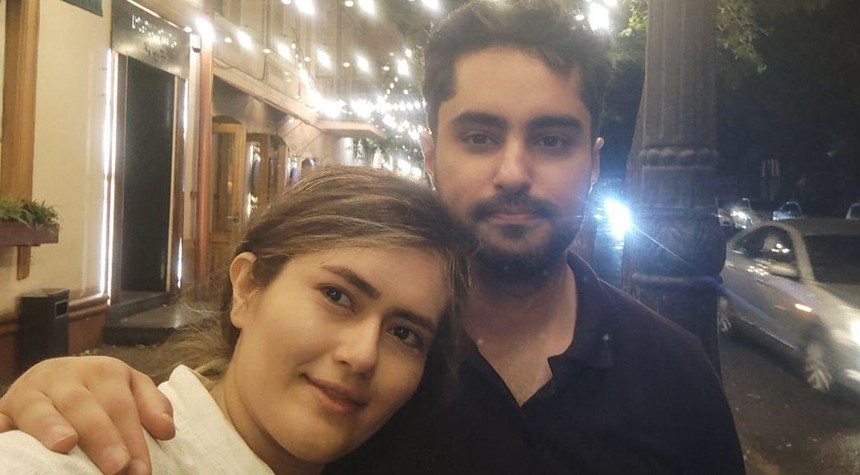
A tragedy has unfolded at Rutgers University that highlights the human cost of America’s immigration restrictions, raising questions about how national security policies affect academic families caught in their enforcement.
Safa Sefidgari, a 33-year-old doctoral candidate from Iran, lost her newborn child in March after delivering prematurely at 30 weeks. Throughout the medical crisis and its heartbreaking conclusion, her husband remained unable to reach her side, blocked by visa denials that immigration attorneys say stem from the administration’s travel restrictions on Iranian nationals.
The couple last saw each other in January. Sefidgari, who holds an F-1 student visa permitting her academic work in New Jersey, had been able to travel and return to the United States. Her husband, Ehsan Entezari, also 33 and completing postdoctoral research in Canada, has filed multiple applications for an F-2 dependent spouse visa. Each application has been denied.
The denial notices, which have been reviewed and verified, offer no specific reason for rejection. Instead, they cite standard language about considering an applicant’s complete circumstances, including family ties, community connections, professional standing, and economic relationships to their home country, as well as travel history and American connections.
The travel policy in question, issued in June of last year, restricts entry from several nations, including Iran. The stated purpose is protecting the United States from foreign terrorists and other threats to national security and public safety.
Sefidgari went into premature labor in early March, approximately four weeks earlier than medical professionals had advised was safe. She faced the cascade of doctor visits and hospitalization without her husband’s support. One week after birth, the infant died.
Now grieving alone, Sefidgari has expressed her belief that the outcome might have been different had her husband been present. She suggests the stress of their enforced separation and the anxiety over potentially years-long division may have contributed to her medical complications.
The couple represents what immigration attorneys describe as an expanding group of Iranian families facing similar circumstances. These families find themselves in what legal experts term “legal limbo” as court challenges to immigration policies proceed through the federal system.
Last December, Sefidgari and Entezari joined a class action lawsuit filed in United States District Court for Massachusetts. The suit includes dozens of Iranian plaintiffs and argues that travel restrictions should not affect the review and issuance of student visas and their dependent categories.
Neither Sefidgari nor Entezari has applied for asylum in the United States. Both maintain their academic status in their respective countries of study.
The case illustrates the complex intersection of national security concerns and the realities faced by international academic communities in America. Universities have increasingly relied on foreign graduate students and researchers to staff laboratories and advance scientific work. Immigration restrictions, whatever their security justifications, inevitably affect these academic relationships.
The facts of this case are straightforward and documented. A young couple pursuing advanced academic work has been separated by visa restrictions. During that separation, a medical emergency occurred, resulting in the loss of their child. Whether such outcomes are an acceptable cost of immigration enforcement remains a matter of intense national debate.
The lawsuit challenging these restrictions continues through the federal court system. Until resolved, families like the Entezaris remain separated, their futures uncertain.
Related: FCC Moves to Block Foreign Internet Routers Over National Security Concerns
