
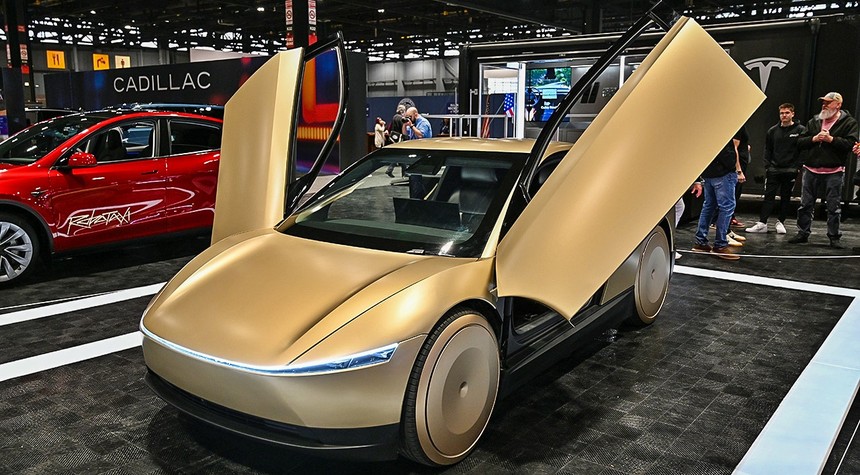
The first Tesla Cybercab has completed assembly at the company’s Gigafactory in Texas, marking what may prove to be a pivotal moment in the evolution of autonomous transportation. The vehicle possesses neither steering wheel nor pedals, a design choice that represents either remarkable confidence in artificial intelligence or a premature leap into uncharted regulatory waters.
Elon Musk announced that production will commence in April. For a company with a documented history of optimistic timelines, this declaration carries particular weight. The more pressing question, however, concerns not when these vehicles will be built, but whether the underlying technology has matured sufficiently to justify removing all manual controls from a vehicle operating on public roads.
The Cybercab is designed as a two-passenger autonomous taxi powered entirely by Tesla’s Full Self Driving system. There exists no manual override mechanism. Should the software encounter a failure scenario, passengers would have no physical controls to engage. This stands in stark contrast to current robotaxi testing programs, including Tesla’s own Model Y trials, which require human supervision and operate at what industry standards classify as Level 2 automation. The Cybercab aims for full unsupervised autonomy, a distinction that cannot be overstated.
Tesla’s approach diverges significantly from its competitors in one critical aspect. The company has eschewed LiDAR technology in favor of a camera-based system supported by neural networks. Musk maintains that vision-based systems alone can solve the autonomy challenge. Critics counter that sensor redundancy proves essential in adverse weather conditions and unpredictable traffic scenarios. This fundamental disagreement will face its ultimate test once these vehicles operate beyond controlled environments.
The vehicle’s reported specifications include a projected operating cost of twenty cents per mile and an anticipated retail price under thirty thousand dollars. Tesla appears positioned to challenge established ride-hailing services while potentially offering private ownership options. If these figures hold, the company could undercut much of its autonomous vehicle competition on price alone.
Yet affordability matters little absent regulatory approval and demonstrated safety performance. Federal Motor Vehicle Safety Standards currently mandate that vehicles include basic driver controls. A vehicle without a steering wheel does not conform to existing regulatory frameworks. Tesla has reportedly requested exemptions, placing regulators in an uncomfortable position. They must now determine whether software systems can satisfy safety standards originally conceived around mechanical controls. Their decision will likely determine whether the Cybercab becomes commonplace or remains confined to limited deployment zones.
Musk has connected the Cybercab to a manufacturing methodology Tesla calls Unboxed. Rather than traditional linear assembly, this approach involves constructing modules separately before final integration late in the production process. Whether this strategy proves more efficient remains to be seen.
The broader implications extend beyond a single vehicle model. If Tesla succeeds in securing regulatory approval and demonstrating reliable autonomous operation, it could accelerate the timeline for widespread driverless transportation. If the technology proves insufficient or regulators deny the necessary exemptions, it may serve as a cautionary example of innovation outpacing both safety validation and legal frameworks.
The coming months will provide answers to questions the automotive industry has debated for years. What remains certain is that Tesla has committed itself to a path few manufacturers would dare to follow.
Related: President Establishes Americas Counter Cartel Coalition at Florida Summit
