
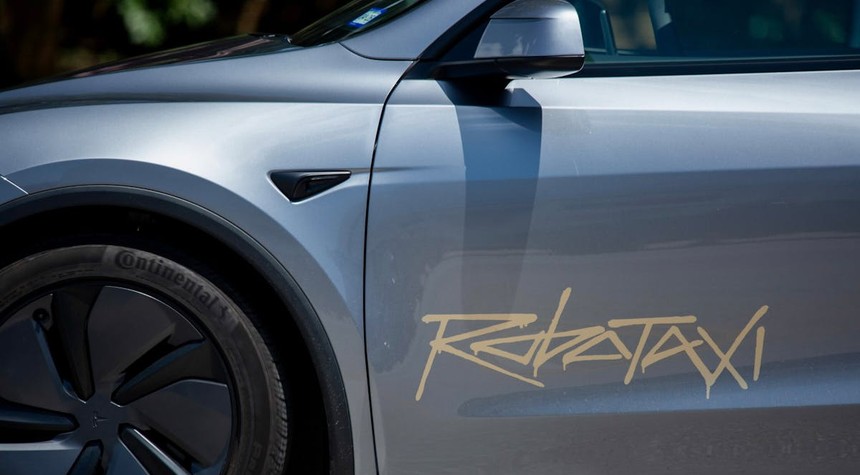
Tesla Expands Robotaxi Service to Dallas and Houston
Tesla has commenced robotaxi operations in Dallas and Houston, expanding its autonomous vehicle service beyond the initial Austin deployment that began last year. The electric vehicle manufacturer announced the expansion Saturday, signaling continued growth of what remains an experimental transportation service in the United States.
The company released video footage demonstrating its Model Y sport utility vehicles operating without human drivers or safety monitors in the front seats across both metropolitan areas. Tesla published maps delineating service boundaries for each city but has not disclosed operational details including fleet size, pricing structure, or availability schedules.
Chief Executive Officer Elon Musk acknowledged the expansion through his social media platform, encouraging residents to utilize the service. The announcement arrives as the autonomous taxi industry experiences renewed momentum, with established competitors accelerating their own expansion plans.
The robotaxi initiative represents a cornerstone of Tesla’s strategic pivot toward artificial intelligence and robotics, a transformation that has fundamentally altered the company’s trajectory from its origins as an electric vehicle manufacturer. Wall Street has placed considerable faith in this transition, with much of Tesla’s $1.3 trillion market valuation predicated on the successful deployment of autonomous driving technology.
The company’s full self-driving software serves as the technological foundation for the robotaxi service. Wider adoption of this software, coupled with expansion of the autonomous taxi network, forms the basis of Tesla’s growth strategy under Musk’s leadership.
Tesla’s initial robotaxi deployment in Austin operated under significant constraints, including mandatory human safety monitors and restricted service areas. The company has progressively relaxed these limitations, expanding operational boundaries and eliminating safety monitors from vehicles. Last year marked another milestone when Tesla initiated ride-hailing services in the San Francisco Bay Area, though details regarding that program’s scope remain limited.
Musk has repeatedly promised aggressive expansion of the robotaxi service throughout the United States. However, the company has fallen short of earlier projections. Previous predictions suggested Tesla robotaxis would operate extensively across multiple American metropolitan areas by the end of last year, a timeline that has not materialized.
The expansion into Dallas and Houston positions Tesla to serve two of the nation’s largest metropolitan markets. Both cities present distinct challenges and opportunities for autonomous vehicle deployment, with sprawling urban landscapes and heavy reliance on automobile transportation.
The autonomous taxi industry has experienced uneven development, with regulatory hurdles, safety concerns, and technological limitations tempering initial enthusiasm. Competitors have pursued varying strategies, with some emphasizing gradual, methodical expansion while others have adopted more aggressive timelines.
Tesla’s approach differs from competitors in significant ways, particularly in its decision to eliminate safety monitors from vehicles earlier in the deployment process. This strategy reflects confidence in the underlying technology but also increases scrutiny regarding safety protocols and incident response procedures.
The coming months will prove critical in determining whether Tesla can maintain expansion momentum and meet revised deployment targets. The success or failure of operations in Dallas and Houston may well influence the pace and scope of future market entries.
Related: Coast Guard Seizes Nearly $30 Million in Cocaine Under Operation Pacific Viper
