
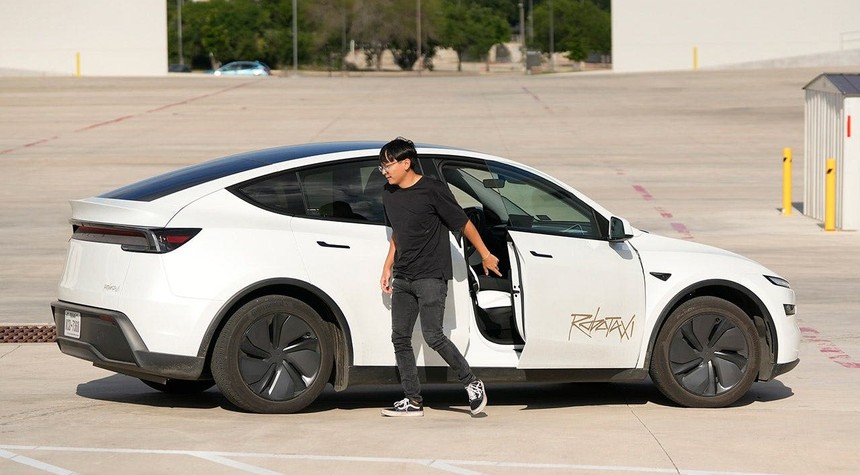
The expansion of autonomous vehicle technology into American cities continues this month with Tesla’s limited launch of robotaxi service in Miami, even as federal safety regulators raise significant concerns about the emerging industry.
The National Highway Traffic Safety Administration has documented multiple instances of autonomous vehicles driving into active emergency scenes and obstructing first responders. The agency states unequivocally that any autonomous vehicle unable to safely interact with emergency personnel poses a danger to the public. NHTSA officials will meet with robotaxi developers later this month to discuss solutions to these documented safety failures.
Against this backdrop of federal scrutiny, Tesla has activated its robotaxi service in select areas of Miami, marking the company’s first expansion beyond Texas, where the service already operates in Austin, Dallas, and Houston. The Miami launch, however, remains notably constrained in scope.
Tesla’s operational zone in Miami covers only a small portion of the metropolitan area, primarily concentrated around West Miami with limited extension toward Doral and Sweetwater. The service area notably excludes downtown Miami, Miami Beach, Miami International Airport, and the majority of Miami-Dade County. Prospective riders can view available service areas through the Robotaxi application before booking.
This limited deployment reveals the considerable challenges autonomous vehicle companies face when entering complex urban environments. Miami presents particular difficulties for self-driving technology. Traffic moves at high speeds, severe weather can arrive suddenly and with force, and human drivers often behave in ways that may confound programmed responses.
The restricted service area also underscores a fundamental gap between the promise of autonomous transportation and its current reality. A rider seeking transport from Miami Beach to Brickell after an evening out would find Tesla’s robotaxi service unavailable, despite the company’s presence in the market.
Tesla now enters a competitive autonomous ride-hailing landscape. Waymo and Amazon’s Zoox already operate in various markets, working to establish consumer confidence in vehicles without human drivers. Each company faces the same essential challenge: proving that autonomous systems can navigate the unpredictable nature of American roadways more safely than human operators.
The timing of Tesla’s Miami expansion, coinciding with heightened federal attention to autonomous vehicle safety, raises questions about the pace of this technological rollout. The documented incidents of self-driving vehicles interfering with emergency operations represent more than technical glitches. They demonstrate scenarios where autonomous systems have failed to recognize and appropriately respond to situations that human drivers would immediately understand require yielding right of way.
As this technology advances from testing phases into commercial deployment, the burden of proof rests squarely with manufacturers to demonstrate not merely that their vehicles can drive themselves, but that they can do so with a margin of safety that justifies public trust. The meetings scheduled between NHTSA and robotaxi developers this month will likely prove consequential in determining whether current autonomous systems meet that standard, or whether additional safeguards must be implemented before further expansion proceeds.
For Miami residents within the limited service area, Tesla’s robotaxi represents an opportunity to experience this emerging technology firsthand. For regulators and the broader public, it represents another test case in determining whether autonomous vehicles are ready for widespread deployment on American streets.
