
A Supreme Court justice has denied an emergency request from a Brooklyn mother seeking immediate enrollment of her son at one of New York City’s most prestigious public high schools, leaving unresolved serious questions about whether the city’s admissions policies discriminate on the basis of race.
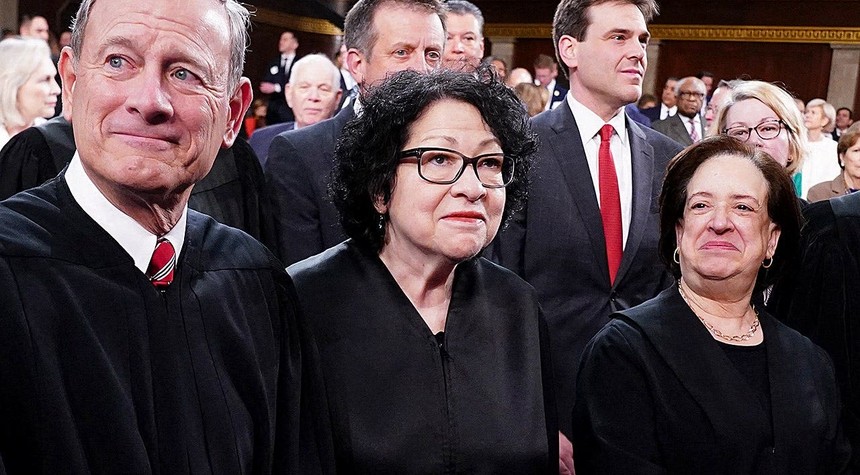
Justice Sonia Sotomayor rejected the emergency bid Monday without explanation. The case stems from a lawsuit filed by Yi Fang Chen, whose Asian American son fell three points short of admission to Stuyvesant High School despite scoring 558 on the required Specialized High School Admissions Test.
At the heart of this legal dispute lies a fundamental question about equal treatment under the law. Chen contends that her son would have gained admission had New York City not raised the cutoff score as part of a deliberate effort to alter the racial composition of the school’s student body.
The lawsuit, filed in April, alleges violations of both the 14th Amendment’s equal protection clause and Title VI of the Civil Rights Act. The case now continues in the U.S. Court of Appeals for the Second Circuit.
The controversy centers on changes made to the Discovery program in 2018 under then-Mayor Bill de Blasio. The city reserved 20 percent of Stuyvesant’s admissions for students classified as economically disadvantaged, effectively raising the threshold score for students admitted through traditional merit-based criteria alone.
The program limited eligibility to students who attended middle schools where at least 60 percent of the student population qualified as economically disadvantaged. This creates the unusual circumstance where some economically disadvantaged students could be excluded from the program simply because their school fell below that threshold.
The disparity in admissions standards proves striking. No student admitted through the Discovery program this year scored higher than 495 on the admissions test, at least 66 points below the cutoff for students admitted based solely on their test scores.
Chen’s son, identified in court documents as M.P., found himself in precisely this position. His score of 558 would have secured admission under previous standards, but the new system left him on the outside looking in.
Dean McGee, an attorney representing Chen with the Pacific Legal Foundation, acknowledged the frustration inherent in delayed justice but expressed confidence in the ultimate outcome. The courts will uphold core equal protection principles, McGee stated, ensuring that no student receives differential treatment in educational opportunities based on race.
The lawsuit raises uncomfortable questions about how educational institutions balance competing values of merit, economic disadvantage, and racial diversity. While the Discovery program ostensibly focuses on economic status, Chen’s complaint argues the policy serves as a mechanism to increase Black and Hispanic enrollment while reducing Asian American admissions.
The timing of this case carries particular significance. It arrives in the wake of the Supreme Court’s recent decision restricting race-conscious admissions policies in higher education, a ruling that may influence how lower courts evaluate similar programs at the secondary school level.
For now, the denial of emergency relief means Chen’s son will not attend Stuyvesant this academic year. The broader legal questions, however, remain very much alive as the case proceeds through the federal appeals process. The resolution will likely carry implications far beyond one family or one school, potentially reshaping how cities across America structure their selective school admissions policies.
Related: Last-Minute Stay Granted for Woman on Death Row in Tennessee Murder Case
