

Researchers have made a remarkable discovery during an underwater voyage, unearthing a community of creatures thriving at unimaginable depths within the sea trenches of the northwest Pacific Ocean.
In an environment characterized by crushing pressure, sparse sustenance, and minimal sunlight, scientists found tubeworms and mollusks flourishing at depths exceeding 31,000 feet (9.5 kilometers). The deepest part of the ocean, it is worth noting, descends to about 36,000 feet (11 kilometers).
This research conducted along the Kuril–Kamchatka and Aleutian trenches has confirmed earlier indications that larger marine life may indeed inhabit such profound depths. Julie Huber, a deep-sea microbiologist with Woods Hole Oceanographic Institution, was not involved with the study but marvelled at the extent of the deep-sea communities uncovered.
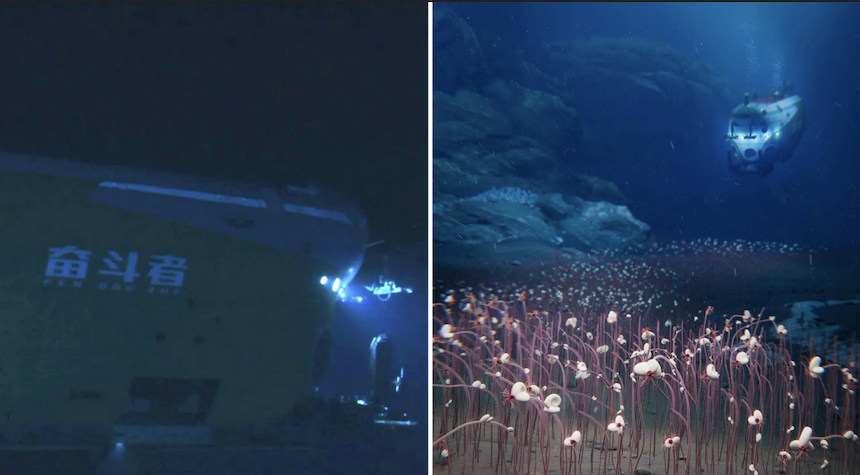
“Look how many there are, look how deep they are,” said Huber, “They don’t all look the same, and they’re in a place that we haven’t had good access to before.”
Reports indicate that in the absence of light to photosynthesize their own food, these seabed inhabitants rely on key elements such as carbon trickling down from above. However, scientists hypothesize that the newly discovered network of creatures may be tapping into carbon reserves accumulated over time in the trench, processing it to create chemicals that seep through the ocean floor’s cracks.
The tubeworms and mollusks may survive by preying on these tiny creatures or cohabiting with them and dining on the fruits of their labor.
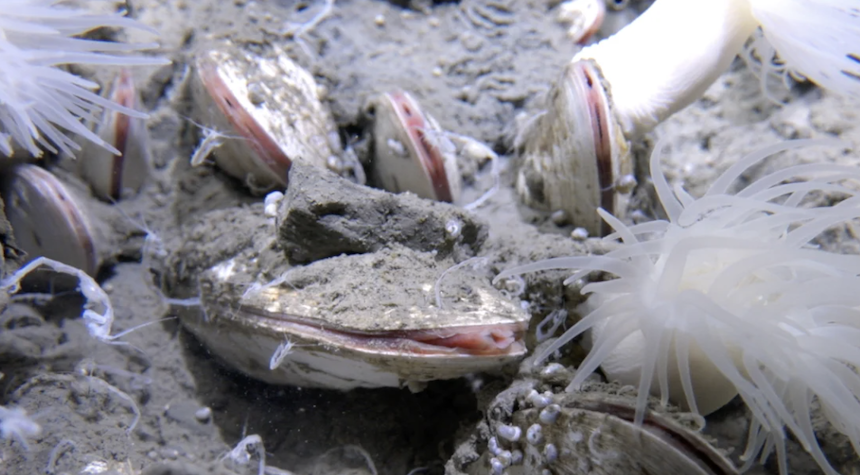
Looking forward, future studies will probe into how these deep-sea creatures have adapted to withstand their extreme habitat and how they harness chemical reactions for nourishment. Mengran Du of the Chinese Academy of Sciences and Vladimir Mordukhovich of the Russian Academy of Sciences, the study authors, state that this discovery challenges “long-standing assumptions about life’s potential at extreme depths.”
This discovery not only deepens our understanding of life in the ocean’s abysses but also raises important questions about the adaptability and resilience of life itself. Remember, in an ever-changing world, staying informed is our best defense.
