
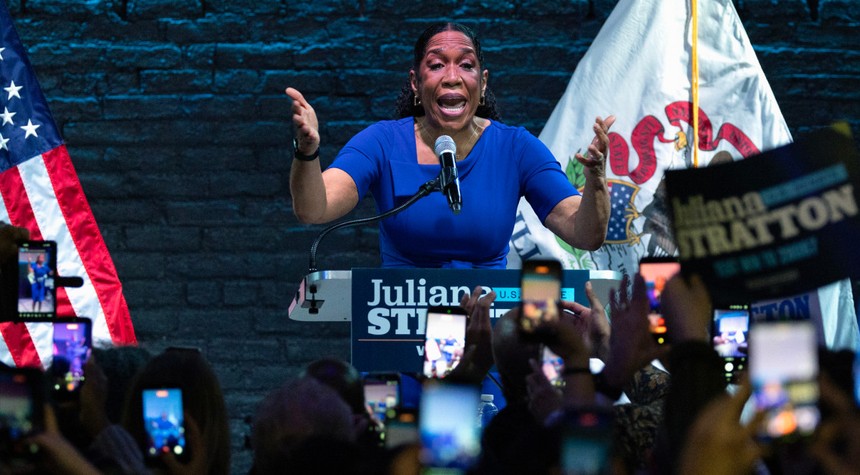
Lieutenant Governor Juliana Stratton has secured the Democratic nomination for United States Senate in Illinois, defeating two sitting members of Congress in a contest that will now move to the general election this November.
With approximately eighty percent of expected votes counted, Stratton commanded forty percent of the vote in Cook County, the state’s most populous region. Representative Raja Krishnamoorthi trailed with twenty-nine percent, while Representative Robin Kelly garnered twenty-three percent of the vote.
The South Side Chicago native demonstrated particular strength in her home city, defeating Krishnamoorthi by a twenty-point margin within Chicago’s boundaries. The two candidates ran even in the suburban areas surrounding the city.
Stratton’s victory is notable for several reasons beyond the immediate political implications. Should she prevail in November’s general election, she would become the sixth Black woman to serve in the United States Senate. Her election would also mark a historic moment, as it would be the first time three Black women have served simultaneously in that chamber.
The race to succeed retiring Senator Dick Durbin presented a stark contrast in campaign resources. Krishnamoorthi, who built a formidable fundraising operation during his five terms in the House of Representatives, invested twenty-nine million dollars in advertising during the primary campaign. Kelly’s campaign expenditures reached one point four million dollars, while Stratton’s campaign spent one point one million dollars on advertisements.
Despite this significant financial disadvantage, Stratton received crucial support from Governor JB Pritzker, who had previously selected her as his running mate after her service in the state Legislature.
The lieutenant governor framed her campaign around a message of confrontation with the current administration in Washington. In recent statements, she positioned herself as a candidate willing to challenge what she characterized as executive overreach.
Stratton articulated voter sentiment as she encountered it throughout the campaign, describing constituents as frustrated with the current political climate in the nation’s capital. She presented herself as a candidate prepared to serve as a check on presidential authority, appealing to voters seeking more assertive representation in the Senate.
The Democratic nomination virtually assures Stratton of victory in November, given Illinois’s political composition. The state has not elected a Republican to the Senate since 1996, and the party’s registration advantage in Cook County and other urban areas provides a substantial electoral cushion for Democratic candidates in statewide races.
Stratton’s path from state legislator to lieutenant governor to Senate nominee represents a relatively swift political ascent. Her victory over two established members of Congress suggests that voters responded to her message despite the considerable financial resources deployed by her opponents.
The general election campaign will now begin in earnest as both parties prepare for November’s contest. For Illinois Democrats, the focus will shift to maintaining their hold on a seat the party has controlled for decades.
Related: Mysterious Seated Burials from 300 BC Puzzle Researchers in Dijon
