
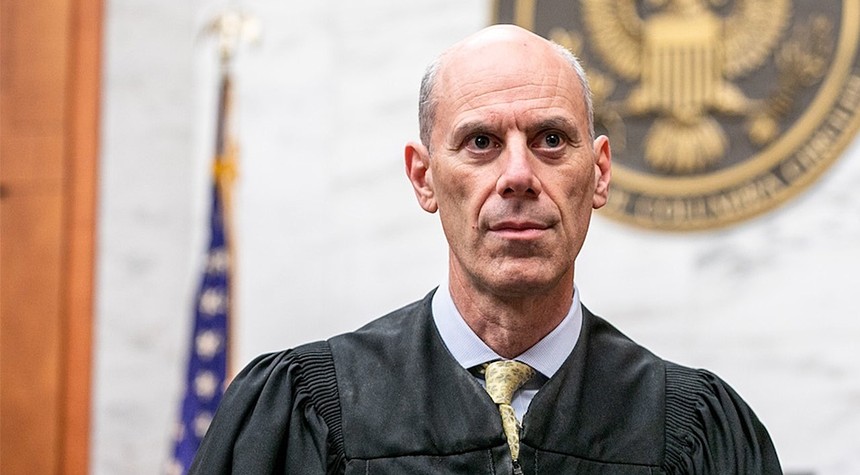
A federal appeals court has dismissed a Justice Department misconduct complaint against U.S. District Judge James Boasberg, a ruling that comes amid escalating tensions between the judiciary and the executive branch over immigration enforcement.
Chief Judge Jeffrey S. Sutton of the Sixth Circuit Court of Appeals issued his dismissal on December 19, though the decision only became public this past weekend. The ruling represents a significant development in what has become a broader confrontation over judicial independence and the limits of executive power.
The Justice Department’s complaint centered on remarks Judge Boasberg allegedly made at a judicial conference, in which he purportedly stated that the Trump administration would trigger a constitutional crisis by disregarding federal court rulings. Those comments reportedly came just days before Boasberg issued an order blocking deportation flights, a sequence of events that raised questions about judicial impartiality in the minds of administration officials.
However, Chief Judge Sutton found the government’s case lacking in fundamental evidentiary support. The appeals court determined that the Justice Department had failed to provide adequate documentation of Boasberg’s statements or sufficient context to evaluate them properly.
“A recycling of unadorned allegations with no reference to a source does not corroborate them,” Sutton wrote in his ruling. “And a repetition of uncorroborated statements rarely supplies a basis for a valid misconduct complaint.”
The dismissal arrives at a moment of heightened political scrutiny of the federal judiciary. House Speaker Mike Johnson announced during his weekly press conference that he would support judicial impeachment proceedings, signaling that Republican leadership views certain judicial actions as grounds for removal from office.
The White House has taken an even more forceful stance. Administration officials confirmed their support for the Senate Judiciary Committee’s impeachment inquiry involving Boasberg and another federal judge whom Republicans have characterized as judicial activists.
“Left-wing, activist judges have gone totally rogue,” a White House official stated. “They are undermining the rule of law in service of their own radical agenda. It needs to stop. And the White House fully embraces impeachment efforts.”
The official further argued that President Donald Trump must be permitted to implement the agenda upon which he was elected, contending that judges who issue what the administration views as partisan rulings have abused their offices and forfeited any claim to impartiality.
Judge Boasberg has emerged as a particular focus of Republican criticism due to multiple rulings related to immigration enforcement policies. His decisions have addressed cases involving the transfer of migrants to El Salvador and other nations as alternatives to detention within the United States.
Most recently, Boasberg drew additional scrutiny following reports that he approved warrants in former special counsel Jack Smith’s investigation that allowed authorities to seize phone records connected to Republican members of Congress.
The convergence of these issues raises substantial questions about the relationship between the branches of government. The constitutional framework establishes an independent judiciary as a check on executive and legislative power, yet that independence has limits when judges are accused of overstepping their authority.
Whether impeachment proceedings will advance beyond the inquiry stage remains uncertain. The Constitution provides for judicial impeachment, but the standard of high crimes and misdemeanors has historically been interpreted narrowly, and successful removals have been rare in American history.
What is certain is that this confrontation between the judiciary and the political branches shows no signs of abating in the near term.
Related: Convicted Human Smuggler Shot After Opening Fire on Border Patrol Agents in Arizona
