
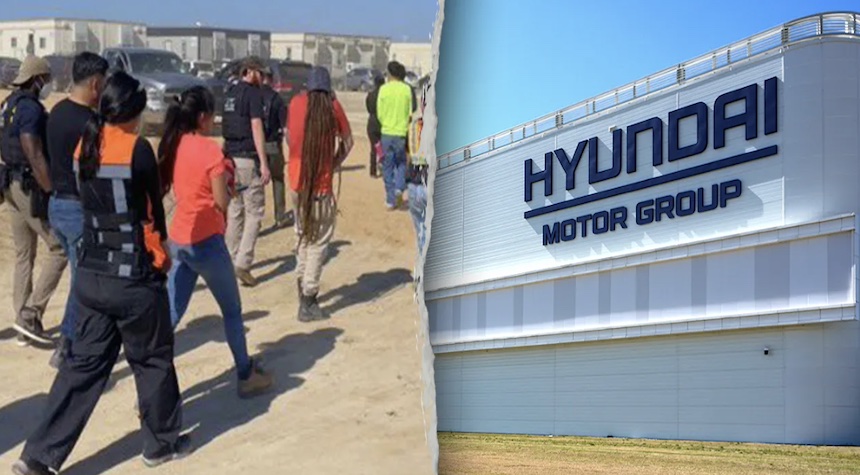
United States immigration authorities have apprehended at least 450 individuals in an operation at a Hyundai manufacturing site in Ellabell, Georgia, as confirmed by federal officials this Friday.
The Hyundai facility, situated roughly 30 miles west of Savannah, was the subject of this action, part of a continuous criminal investigation into allegations of illegal employment practices and other grave federal offenses,” according to a statement provided by a public affairs officer from the Department of Homeland Security.
The statement went on to emphasize the importance of this operation in safeguarding jobs for Georgians, ensuring a level playing field for law-abiding businesses, securing the integrity of our economy, and protecting workers from exploitation.
Hyundai stated the raid, affirming it was aware of the incident and was “closely monitoring the situation and working to understand the specific circumstances.” It further clarified that to the best of their knowledge, none of those detained were directly employed by Hyundai Motor Company.

During a press briefing on Friday, South Korea’s foreign ministry expressed its “concerns and regret” about the raid on the Hyundai-LG battery plant, “urging special attention to ensure that the legitimate rights and interests of our citizens are not violated.”
On one hand, “This investigation is focused on ensuring accountability for those who violate the law and upholding the rule of law,” as stated by the DHS spokesperson. On the other hand, there are urgent calls for the protection of economic activities of companies investing in the U.S. and the rights of nationals so they are not unfairly violated, as voiced by a spokesperson for the foreign ministry.
Federal officials are planning a press briefing to release more information “regarding a recent criminal search warrant and enforcement actions to combat illegal employment practices in the state of Georgia,” as communicated by DHS officials. This raises important questions about the future of immigration enforcement and its impact on international relations.
