
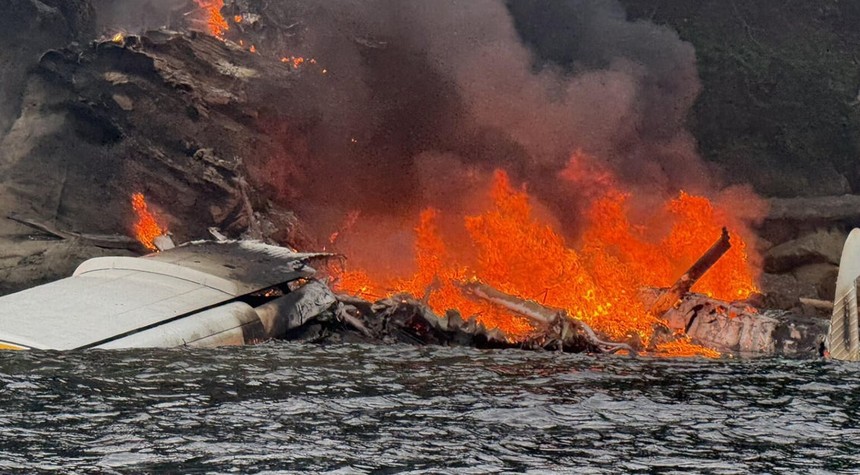
A seaplane carrying eleven souls plunged into the waters of Puget Sound on Thursday evening, bursting into flames shortly after impact. In what can only be described as a fortunate outcome to a harrowing ordeal, all eleven individuals aboard survived the crash.
The aircraft, a de Havilland DHC-3 Otter operated by Kenmore Air, departed Seattle bound for Roche Harbor in the San Juan Islands at approximately 5:15 p.m. local time. The plane carried ten passengers and one pilot when it went down in Shallow Bay near Sucia Island, roughly three minutes after making an abrupt 180-degree turn in its flight path.
According to the San Juan County Sheriff’s Office, all passengers were rescued from the water, though injuries varied considerably in severity. Medical personnel treated patients for head injuries, broken bones, and lacerations. One individual remained in critical condition as of Thursday evening. Three airlift ambulances responded to the scene to transport the injured.
Video footage captured by a witness showed the aircraft wobbling precariously just feet above the water’s surface before making impact and erupting in flames. By the time Coast Guard personnel arrived, the seaplane had largely submerged beneath the chilling waters of the sound.
Lt. Cmdr. Marshall Burtt of the Coast Guard offered measured praise for the pilot’s actions during the emergency. “The pilot probably did a really good job to set it down gently enough to give everybody a chance,” Burtt stated. “A lot of things went right to get everybody out of the plane.”
The National Transportation Safety Board confirmed Friday that it has opened an investigation into the incident. The agency noted that the airplane “impacted the water and subsequently caught on fire.” Investigators planned to recover the aircraft Friday and transport it to a secure facility for thorough examination.
Aviation safety experts suggest this investigation may proceed more efficiently than typical crash inquiries. Investigators will have the advantage of interviewing the surviving pilot, speaking with witnesses, and reviewing video documentation of the crash itself.
Flight tracking data revealed the seaplane’s unusual maneuver in its final minutes aloft. The aircraft executed a sharp reversal of course, turning back toward Sucia Island after having already passed the location where it would ultimately go down.
Kenmore Air, which identifies itself as the largest seaplane airline in the United States, released a statement acknowledging the accident while declining to speculate on its cause. Chief Executive Officer David Gudgel assured the public that the company is “fully cooperating with the investigating authorities” and committed to “providing verified information as it becomes available.”
The company operates flights throughout the Pacific Northwest and British Columbia, maintaining both seaplane operations and a wheeled aircraft division known as Kenmore Air Express.
Shallow Bay sits at the northwestern tip of Sucia Island State Park in Washington’s San Juan Islands, positioned north of Seattle and near the Canadian border. The location’s proximity to emergency response resources likely contributed to the swift rescue operation that saved all eleven lives.
The cause of the crash remains under investigation. The facts, as they stand, speak to both the dangers inherent in aviation and the critical importance of skilled piloting and rapid emergency response.
Related: California Hiker Found Dead in Big Sur Died from Alcohol Withdrawal Complications
