
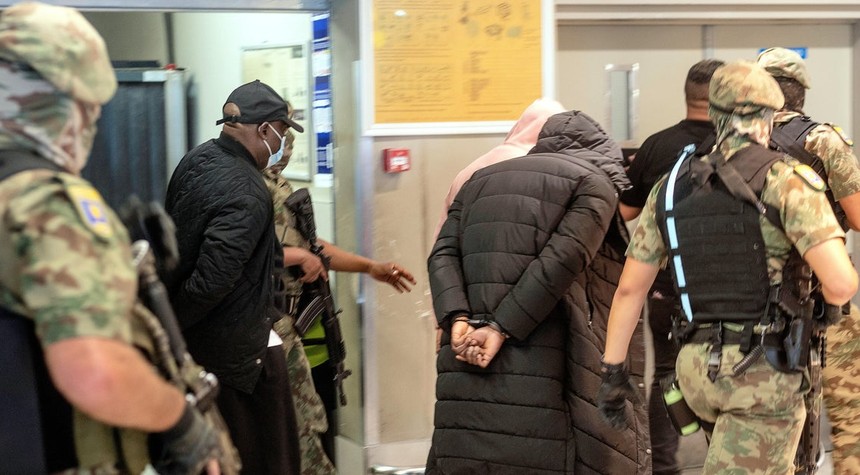
Six Nigerian nationals arrested three years ago in South Africa will be extradited to the United States on Friday to face wire fraud and money laundering charges in connection with an elaborate romance scam that defrauded more than 100 American women of over $6 million.
South African authorities confirmed that the men, apprehended in Cape Town in 2021, will be transferred to Federal Bureau of Investigation officials who arrived in the country Friday morning. The suspects are alleged members of the Black Axe, a criminal organization that Interpol has identified as responsible for a significant portion of global cyber-enabled financial fraud.
The charges stem from what prosecutors describe as sophisticated online relationship schemes targeting pensioners and businesspeople across the United States. According to South African police spokesperson Katlego Mogale, the six men will be transported from a Cape Town correctional facility to the international airport, where they will be handed over to FBI agents and United States Secret Service officials.
This extradition follows a similar case from 2023, when a prominent Black Axe leader was sent to America to face charges of internet fraud conspiracy and money laundering. The pattern suggests sustained law enforcement pressure on these transnational criminal enterprises.
The scope of romance fraud has expanded dramatically in recent years. Federal Trade Commission data reveals that more than 64,000 Americans lost over $1 billion to romance scams in 2023 alone. That figure represents a doubling from the $500 million lost just four years earlier, illustrating the accelerating threat these criminal networks pose to vulnerable Americans.
International law enforcement cooperation has intensified in response. A recent Interpol operation targeting West African organized crime groups resulted in 58 arrests and identified 263 suspects connected to various criminal syndicates engaged in similar schemes. That operation focused on disrupting money laundering operations, identifying high-value targets, seizing assets, and supporting prosecutions.
In South Africa, authorities conducted raids at seven Johannesburg locations linked to a syndicate running romance and investment scams against retirees in English-speaking nations. Those operations yielded 39 arrests, the seizure of $2.67 million, and the freezing of more than 250 bank accounts.
The criminal methodology involves cultivating online relationships over extended periods, building trust before requesting financial assistance or investment opportunities. Interpol describes these networks as highly organized operations that exploit emotional vulnerabilities and technological platforms to reach victims across international borders.
The prevalence of these schemes has raised questions about the adequacy of consumer protections and public awareness campaigns. While law enforcement agencies have increased their focus on transnational cybercrime, the statistics suggest criminals continue to find willing victims despite growing publicity about their tactics.
The extradition demonstrates continued collaboration between American and African law enforcement agencies in pursuing suspects who operate across multiple jurisdictions. As these criminal networks become increasingly sophisticated in their approach, international cooperation remains essential to protecting citizens from financial exploitation.
The six men will face prosecution in United States federal courts, where wire fraud and money laundering charges carry significant potential sentences. The outcome of these cases may serve as a deterrent to others engaged in similar criminal enterprises targeting American citizens through digital deception.
Related: President Trump Signs Legislation for Medal of Honor Monument on National Mall
