
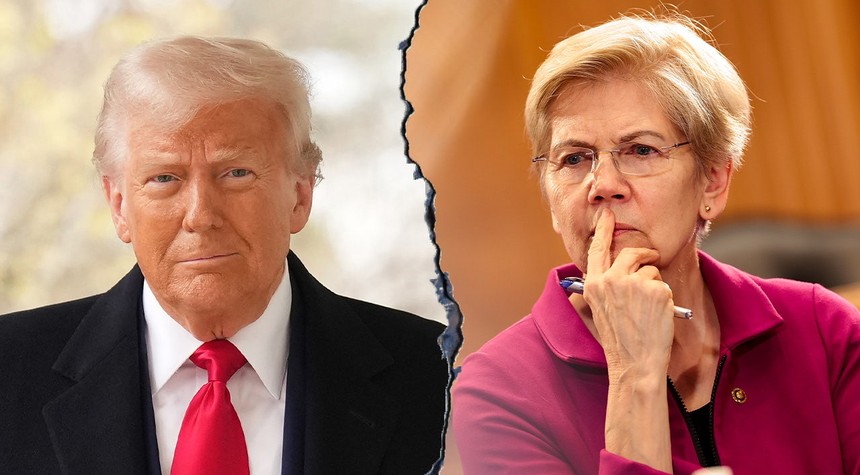
President Donald Trump’s call to ban congressional stock trading during Tuesday’s State of the Union address drew one of the evening’s most notable bipartisan responses, according to real-time polling data that measured voter reactions throughout the speech.
The moment came as the president urged Congress to pass the Stop Insider Trading Act, punctuating his remarks with a pointed reference to former House Speaker Nancy Pelosi, whose stock trading activities have drawn scrutiny from ethics watchdogs and constituents alike.
“Pass the Stop Insider Trading Act without delay,” Trump declared to sustained applause from the assembled lawmakers. The response from the chamber was remarkable in its breadth. Democratic senators, including Massachusetts Senator Elizabeth Warren, rose to their feet in applause, a rare show of agreement during an otherwise partisan evening.
The president seized upon the moment with characteristic directness. “They stood up for that, I can’t believe it,” Trump remarked, before adding, “Think Nancy Pelosi would stand up if she was here? Doubt it.”
The dial testing conducted by Maslansky & Partners revealed a striking divergence in how different voter groups responded to this portion of the address. When Trump emphasized that the legislation must be passed “without delay,” Republican and Independent voters registered sharply positive reactions. Democratic voters, by contrast, showed minimal movement in their response levels, suggesting a more measured reception to the president’s proposal despite the applause from Democratic lawmakers in attendance.
This disconnect between Democratic voters and their elected representatives may reflect the complicated politics surrounding congressional stock trading reform. While the issue has garnered widespread public support across party lines, legislative action has repeatedly stalled in Congress. Members of both parties have faced criticism for their investment activities, which critics argue create conflicts of interest and undermine public trust in government institutions.
The issue gained prominence during Pelosi’s tenure as Speaker, when reports of her husband’s stock trades in companies affected by congressional legislation sparked calls for stricter regulations. Pelosi initially resisted such measures but later voiced support for restrictions as public pressure mounted.
The real-time polling data underscores what many political observers have long recognized: congressional stock trading reform represents one of the few policy areas where substantial majorities of Americans, regardless of political affiliation, agree that change is necessary. The question remains whether this consensus will translate into legislative action.
The Stop Insider Trading Act would impose significant restrictions on lawmakers’ ability to trade individual stocks while in office. Proponents argue such measures are essential to restoring public confidence in Congress, while some members have resisted, citing concerns about implementation and enforcement.
As the applause died down Tuesday evening, the president had delivered one of his address’s most unifying moments, at least in terms of public sentiment. Whether that unity will prove sufficient to overcome years of congressional inertia on this issue remains to be seen.
Related: President Awards Legion of Merit to Coast Guard Rescue Swimmer for Texas Flood Heroism
