
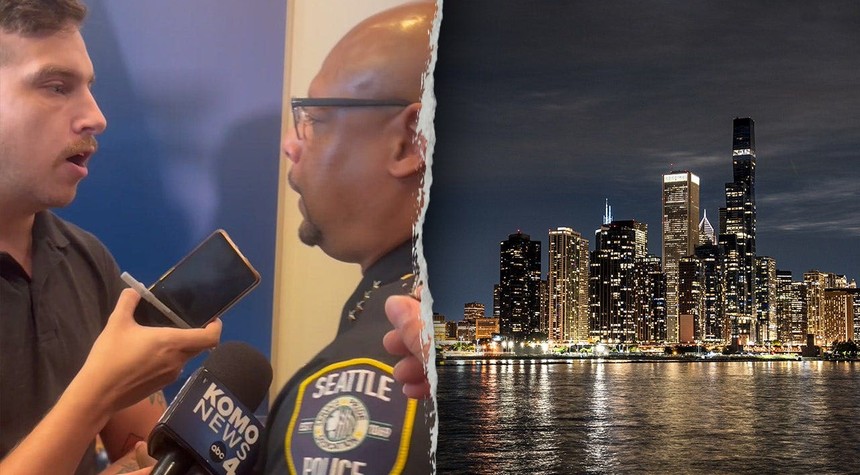
Seattle Police Chief Shon Barnes finds himself defending his leadership amid mounting questions about his whereabouts during a mass shooting that claimed three lives at a popular city food festival over the weekend.
The shooting occurred Sunday evening at the Bite of Seattle, an annual culinary event held at Seattle Center. As many as three gunmen opened fire on one another, leaving three dead and four wounded as innocent bystanders were caught in the violence. Chief Barnes was not in Seattle at the time. He was in Dallas, Texas, attending the National Organization of Black Law Enforcement Executives’ annual conference.
The absence has become a focal point of criticism, particularly given the severity of the incident and the public’s expectation that the city’s top law enforcement official be present during major crises. When confronted by a reporter about how frequently he is away from the city, Barnes responded sharply, insisting “those reports are wrong” before a staff member intervened to redirect the conversation.
The incident has brought renewed attention to a personal situation that has complicated Barnes’s tenure in Seattle. His wife and children remain in Chicago, a fact that has necessitated regular travel between cities. The arrangement has raised questions about whether the chief can effectively lead a department grappling with rising violence while managing a long-distance family situation.
This is not merely a matter of optics. Seattle has faced significant public safety challenges in recent years, and residents expect visible, engaged leadership from their police chief. The mass shooting at a family-friendly event has only intensified those expectations.
The investigation into the shooting continues, with authorities now searching for a third suspect. One alleged gunman has been found dead. The chaotic nature of the incident, with multiple shooters engaging one another in a crowded public space, underscores the challenges facing Seattle’s law enforcement community.
Barnes’s defenders note that police chiefs regularly attend professional conferences and that the department has established protocols for handling major incidents in the chief’s absence. They argue that modern communication technology allows for real-time coordination regardless of physical location.
Nevertheless, the criticism persists. Leadership, particularly in law enforcement, often requires physical presence. When tragedy strikes, the community looks to its leaders not just for operational competence but for reassurance and visible commitment to public safety.
The question facing Seattle is whether Chief Barnes can effectively serve a city while maintaining family ties hundreds of miles away. It is a human dilemma with professional consequences. As the investigation into Sunday’s shooting continues and the city mourns its dead, Barnes will need to address not just the immediate security concerns but the broader questions about his ability to lead Seattle through its ongoing public safety challenges.
The coming weeks will likely determine whether this incident represents a temporary controversy or a more fundamental challenge to Barnes’s leadership of the Seattle Police Department.
Related: Ten Women Come Forward with Sexual Assault Claims Against Jared Leto