
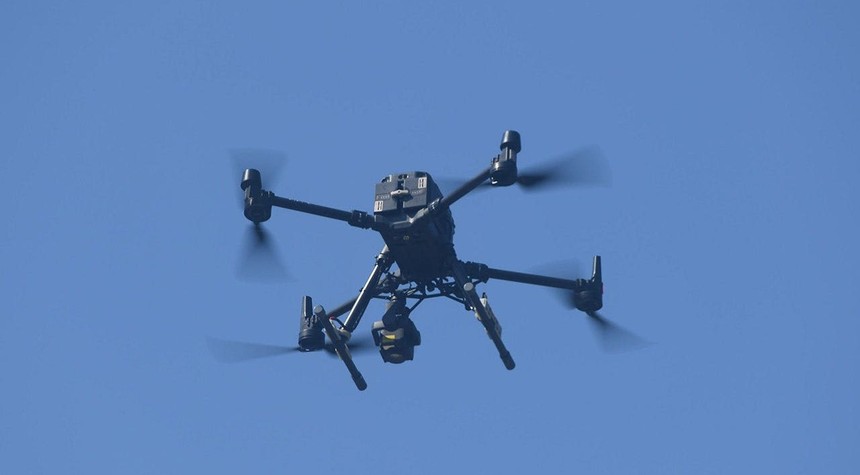
A senior military commander has delivered a stark assessment of America’s preparedness to defend against one of the most pressing threats facing our homeland installations today.
Army Lt. Gen. Joseph Jarrard, deputy commander of U.S. Northern Command and vice commander of the American contingent at the North American Aerospace Defense Command, told defense officials Thursday that U.S. military bases remain fundamentally unprepared to counter swarms of small attack drones. His warning comes despite the Pentagon’s request for billions of dollars in new counter-drone weaponry.
Speaking at the annual Space and Missile Defense Symposium, Jarrard outlined a troubling gap in America’s defensive capabilities. The problem, he explained, extends well beyond the weapons systems needed to shoot down incoming threats. Many installations lack even the basic sensor technology required to detect and track drone swarms in the first place.
“We don’t have the sensors, and depending on where that swarm is going to attack, it depends on whether we have any sensors at all, and also whether we’ve got any effectors to go after that problem,” Jarrard stated plainly.
The general’s assessment arrives at a critical juncture. Adversaries around the world have demonstrated the devastating effectiveness of small, inexpensive drones in modern warfare. From Ukraine to the Middle East, these weapons have fundamentally altered the battlefield calculus, providing asymmetric advantages to forces that deploy them effectively.
Meanwhile, defense experts continue advancing directed energy weapons as part of the solution to this evolving threat. Tom Karako, a missile defense expert at the Center for Strategic and International Studies, has been examining how laser weapons are transitioning from experimental technology to operational systems. However, Karako emphasizes that these emerging capabilities will complement rather than replace traditional missile defense systems.
The challenge facing military planners is twofold. First, they must identify which bases face the greatest risk and prioritize the deployment of detection systems accordingly. Second, they must ensure those same installations possess the appropriate weapons to neutralize threats once detected.
The vulnerability Jarrard describes represents a significant gap in homeland defense at a time when potential adversaries have demonstrated both the capability and willingness to employ drone swarms against military targets. Small commercial drones, readily available and easily modified, can be weaponized at minimal cost, making them an attractive option for state and non-state actors alike.
As the Pentagon continues developing its counter-drone strategy and requesting substantial funding increases, the question remains whether these investments will arrive quickly enough to address the vulnerabilities our military commanders are identifying today. The technology exists, but deployment across the vast network of American military installations requires time, resources, and strategic prioritization.
General Jarrard’s candid assessment serves as a reminder that even the world’s most advanced military faces significant challenges in adapting to rapidly evolving threats. The drone swarm problem demands immediate attention and sustained investment if we are to adequately protect the men and women serving at installations across the homeland.
Related: Texas Gains Ground as California Companies Flee Mounting Business Expenses
