
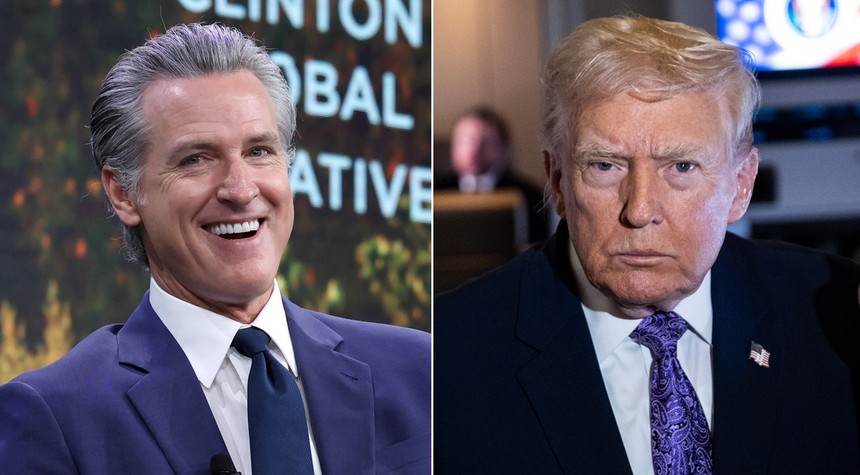
California Governor Gavin Newsom drew sharp criticism this week after his social media team posted an artificially generated video depicting President Donald Trump and senior administration officials in handcuffs.
The video, shared by the Democratic governor, showed Trump alongside Defense Secretary Pete Hegseth and White House Deputy Chief of Staff Stephen Miller in apparent custody. Text overlaying the digitally altered images read, “It’s CUFFING Season.”
The post came in response to a White House message about immigration enforcement operations. The administration’s original post stated, “WE HEARD IT’S CUFFING SZN. Bad news for criminal illegal aliens. Great news for America.” That message accompanied video footage of law enforcement activities related to the ongoing crackdown on illegal immigration.
The exchange represents the latest escalation in tensions between California’s Democratic leadership and the Trump administration over immigration policy and enforcement priorities.
Peter Navarro, the President’s senior counselor for trade and manufacturing, issued a forceful rebuke of the governor’s social media tactics. Navarro, who previously served time in federal custody for contempt of Congress charges, expressed particular offense at the imagery.
“I went to prison, defending the constitution because of woke individuals like you who weaponized our justice system,” Navarro stated. “This isn’t close to funny. All you are doing is inciting more violence.”
The incident occurred as Governor Newsom appeared at a business summit in New York, where he addressed questions about his administration’s increasingly combative social media presence. The governor has previously defended what some observers characterize as Trump-style communication tactics, suggesting such approaches serve to energize his political base and draw attention to policy disagreements.
The timing of the social media exchange coincides with intensified immigration enforcement operations under the current administration. The Department of Homeland Security has expanded detention and deportation activities in recent months, leading to ongoing disputes with officials in sanctuary jurisdictions like California.
Neither the governor’s office nor the White House provided additional comment on the matter.
The incident raises questions about the boundaries of political discourse in the digital age, particularly when elected officials employ manipulated imagery to criticize their opponents. While political satire and criticism have long traditions in American democracy, the use of artificial intelligence to create realistic depictions of officials in compromising situations represents relatively new territory.
The broader context includes ongoing policy battles between California and the federal government over immigration enforcement, healthcare provisions for undocumented immigrants, and the allocation of federal resources. These disputes have frequently spilled into public view through social media exchanges and press statements from both sides.
As the 2026 midterm elections approach, such confrontations between Democratic governors and the Republican administration appear likely to continue, with social media serving as an increasingly prominent battlefield for political messaging and counter-messaging.
Related: US Exports Surge to Highest Level in Months as Trade Gap Narrows
