
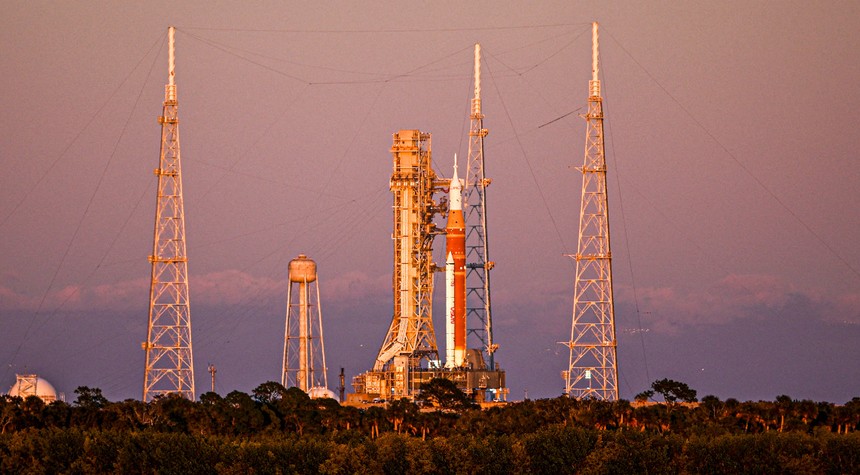
NASA announced this week that it will return the Space Launch System rocket to its assembly hangar for repairs, a setback that will delay the Artemis II mission and push back America’s return to lunar orbit by at least one month.
The massive 322-foot rocket has stood ready at Launch Pad 39B at Kennedy Space Center in Florida since mid-January. However, engineers discovered a blockage in the helium flow system connected to the upper stage booster during overnight inspections on February 19. The issue requires immediate attention and precludes any launch attempt in March as originally planned.
The decision to roll back the rocket represents a significant operational undertaking. Beginning Wednesday morning at approximately 9 a.m. Eastern Time, the 11-million-pound rocket assembly, topped with the Orion crew capsule, will begin its deliberate four-mile journey back to the Vehicle Assembly Building. The massive crawler-transporter platform will move at roughly one mile per hour, making the return trip an estimated 12-hour endeavor.
NASA Administrator Jared Isaacman addressed public concerns over the weekend, acknowledging the disappointment felt across the space community. “That disappointment is felt most by the team at NASA, who have been working tirelessly to prepare for this great endeavor,” Isaacman stated.
The Artemis II mission carries substantial significance for America’s space program. Four astronauts are scheduled to fly around the moon in what would mark the first crewed lunar mission since the Apollo program concluded more than five decades ago. The mission serves as a critical precursor to Artemis III, which aims to land American astronauts on the lunar surface.
Once the rocket reaches the Vehicle Assembly Building, NASA teams will install specialized platforms to access the problematic helium system components. The agency plans to conduct a thorough investigation of the blockage while simultaneously performing additional maintenance work. Engineers will replace batteries in both the rocket’s upper stage and the flight termination system, a critical safety mechanism designed to destroy the rocket if it veers off course during launch.
NASA officials indicated that an April launch remains possible, though the timeline depends entirely on the complexity of repairs and subsequent testing requirements. The agency has not yet established a firm new launch date.
The helium system in question plays a vital role in the rocket’s operation, helping to pressurize fuel tanks and maintain proper flow to the engines. Any compromise in this system could pose serious risks during the critical launch phase.
This delay, while frustrating for those eager to see America return to the moon, underscores NASA’s commitment to crew safety and mission success. The space agency has consistently maintained that it will not proceed with launch until all systems meet rigorous safety standards.
The Artemis program represents America’s most ambitious space exploration initiative in decades, with the ultimate goal of establishing a sustained human presence on the lunar surface and using the moon as a staging ground for eventual missions to Mars.
Related: Former American Idol Contestant Charged with Murder in Ohio Wife’s Death
