
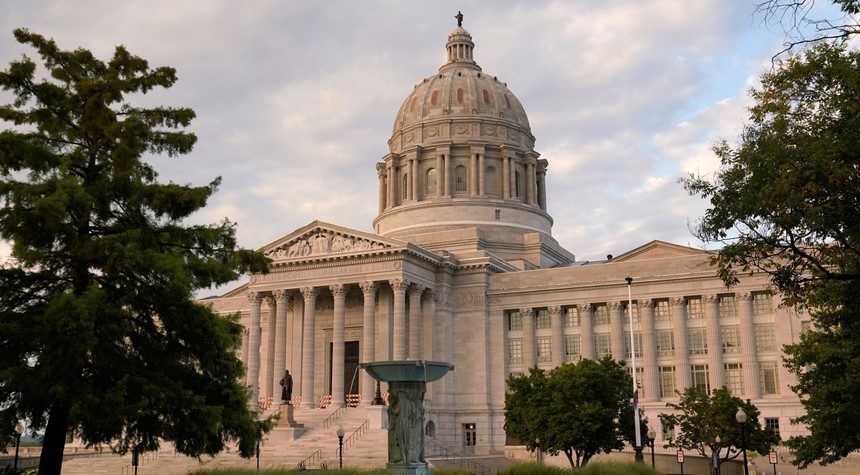
A jurisdictional collision between state and federal courts has thrown Missouri’s upcoming congressional elections into disarray, with conflicting rulings issued within hours of each other Tuesday leaving election officials uncertain which district map will govern November’s contests.
The legal turbulence began when Justice Brett Kavanaugh, acting on emergency requests from his circuit, declined to overturn a Missouri Supreme Court decision from last week. That ruling had blocked implementation of a newly drawn congressional map while a citizen-led ballot initiative challenging the redistricting plan proceeds through the referendum process.
However, a federal district judge in Missouri subsequently ruled in favor of the Republican-drawn map, siding with two GOP congressional candidates who argued that reverting to the previous district configuration would violate federal constitutional protections. The candidates contended that the new map, already used in August primary elections, must remain in effect for the general election to maintain consistency and avoid constitutional violations.
Missouri Governor Mike Kehoe and Attorney General Catherine Hanaway, both Republicans, announced Tuesday evening their intention to proceed with the redrawn map for November’s election, despite the uncertain legal landscape.
The conflicting rulings present fundamentally different legal questions. The Missouri Supreme Court addressed matters of state law exclusively, while the federal case raises questions under the United States Constitution. This distinction may prove critical as the matter potentially returns to the nation’s highest court.
At the heart of this dispute lies a 2025 Republican redistricting plan designed to consolidate the state’s congressional delegation. The redistricting would eliminate one of Missouri’s two Democratic-held seats, currently represented by Congressman Emanuel Cleaver. Should the Missouri Supreme Court ruling ultimately prevail, the 2022 map dividing the state into six Republican-held and two Democratic-held districts would govern November’s elections.
The controversy escalated after a citizens’ organization gathered sufficient signatures supporting a state referendum to overturn the Legislature’s redistricting plan and postpone its implementation until the 2026 election cycle. Missouri Secretary of State Denny Hoskins, a Republican, refused to place the measure on the ballot, asserting that redistricting plans fall outside the scope of voter referendum authority.
The Missouri Supreme Court unanimously disagreed with this interpretation, finding no provision in state law exempting redistricting plans from the referendum process. The court determined the referendum petition was legally sufficient and timely filed. Under Missouri law, when a valid ballot initiative challenging legislative action is certified, the contested law is automatically suspended until voters render their decision.
The state Supreme Court further noted that any resulting confusion stemmed from Secretary Hoskins’ delay in determining whether the referendum could proceed.
The legal standoff arrives at a particularly inopportune moment. Missouri’s deadline for finalizing ballots was Tuesday at 5 p.m. local time, with the first absentee ballots scheduled for distribution September 19. This compressed timeline leaves minimal room for additional appeals or clarification.
The federal lawsuit was filed by Rick Brattin, the Republican nominee seeking to represent the district currently held by Congressman Cleaver, along with Missouri Representative Bob Onder and two registered voters.
As this matter likely advances to further judicial review, election officials face the unenviable task of preparing for November’s contests without certainty regarding which district boundaries will apply. The resolution of this dispute will determine not only the immediate configuration of Missouri’s congressional delegation but may also establish important precedents regarding the interplay between state referendum powers and federal constitutional requirements in redistricting matters.
Related: ChatGPT Eliminates Thousands of Jobs in Kenya’s Academic Cheating Industry
