
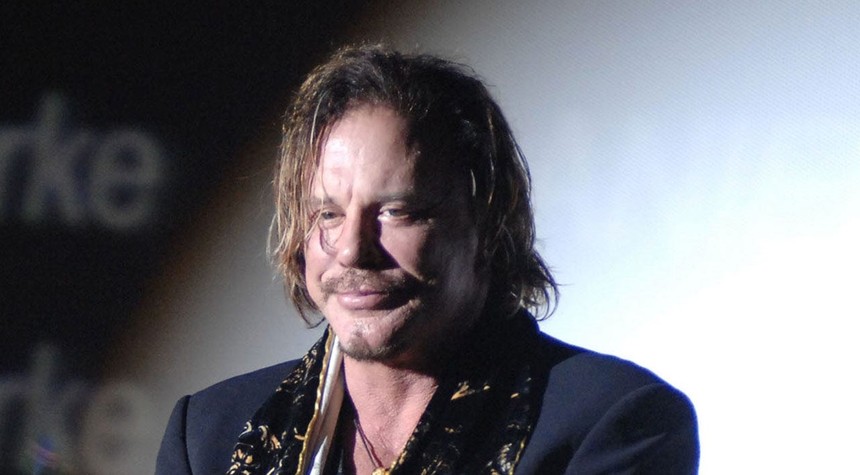
Mickey Rourke, the actor whose career has traversed the heights of Hollywood stardom and the depths of personal struggle, now faces eviction from his Los Angeles residence after allegedly falling behind on nearly $60,000 in rent payments.
Members of Rourke’s management team have initiated a public fundraising campaign through GoFundMe to assist the actor in raising the necessary funds to remain in his home. Within the first 24 hours of the campaign’s launch, donations exceeded $70,000, surpassing the amount reportedly owed.
This latest financial difficulty represents another chapter in what has been an extraordinarily turbulent career marked by professional triumphs, self-imposed setbacks, and recurring legal complications.
Rourke’s early years in Hollywood demonstrated considerable promise. His performances in films such as “Body Heat,” “Diner,” “9 ½ Weeks,” and “Angel Heart” established him as a serious dramatic talent during the 1980s. Critics and audiences alike recognized his intense screen presence and commitment to complex roles.
However, at the height of his acting career, Rourke made the unconventional decision to pursue professional boxing. This departure from Hollywood proved costly in multiple ways. The physical toll of boxing resulted in significant facial injuries that would later require extensive reconstructive surgery. The time away from acting also disrupted his momentum in an industry that rarely forgives extended absences.
When Rourke eventually returned to acting, he faced a changed landscape. The roles that might have been his had gone to others, and his altered appearance limited the types of characters he could portray. For years, he struggled to regain his footing in Hollywood, accepting smaller roles in lower-budget productions.
His career experienced a notable resurgence with his performance in “The Wrestler” in 2008, which earned him an Academy Award nomination and renewed industry respect. The role, which paralleled aspects of his own life story, demonstrated that his acting abilities remained intact despite the intervening years.
Yet financial stability has apparently remained elusive. The current eviction proceedings suggest that even periods of professional success have not translated into lasting economic security for the actor.
The decision by his management team to seek public assistance through crowdfunding raises questions about the sustainability of careers in the entertainment industry, even for those who have achieved significant recognition. It also highlights the precarious financial position in which some performers find themselves, regardless of past accomplishments.
The rapid response from donors indicates that Rourke retains a loyal following willing to support him during this difficult period. Whether this assistance will provide a temporary reprieve or a foundation for more lasting stability remains to be seen.
As this situation develops, it serves as a reminder of the unpredictable nature of careers in entertainment and the personal costs that can accompany professional choices, however well-intentioned they may have seemed at the time.
Related: Tim Walz Ends Gubernatorial Campaign Amid Fraud Crisis
