
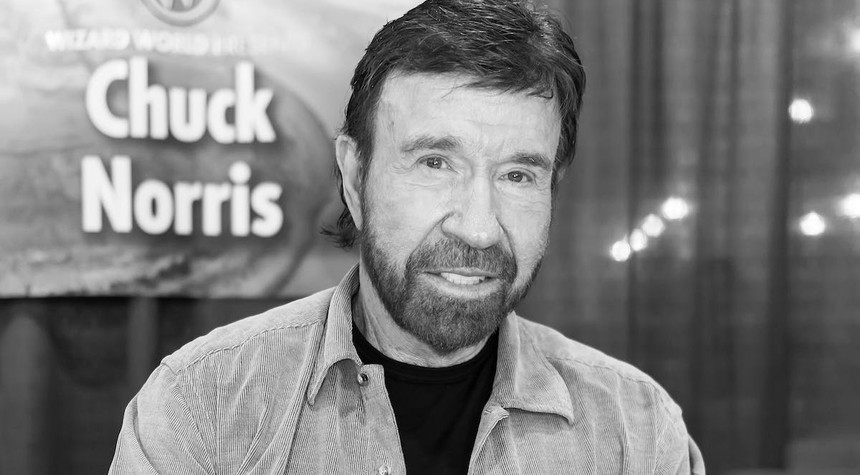
The death of action star Chuck Norris on March 19 has prompted an unexpected controversy, not over the man’s storied career, but over how one entertainment publication chose to memorialize him.
A writer for a major entertainment industry publication elected to focus his obituary coverage not on Norris’s decades-long career in film and television, but rather on the actor’s conservative political views. The headline questioned whether Norris’s politics might “overshadow his legacy,” and the accompanying article went so far as to suggest that the martial arts star’s work represented “dangerous propaganda” rather than entertainment.
The response from the public was swift and overwhelmingly negative.
Florida Governor Ron DeSantis weighed in on the matter, calling Norris “an action legend and a great American” while describing the publication’s approach as emblematic of why many Americans have lost faith in the media establishment.
Social media platforms filled with criticism of the article’s tone and timing. One observer noted that throughout the day following Norris’s death, Americans had been sharing the famous Chuck Norris jokes that became a cultural phenomenon, all stemming from his action movie persona. Politics, this critic noted, had not entered the conversation until the entertainment publication injected it.
Others pointed out the stark contrast between this particular obituary and the respectful coverage provided by other mainstream outlets, which focused appropriately on Norris’s professional achievements and cultural impact.
The controversy highlights a broader tension in American media regarding the treatment of conservative figures in entertainment. Norris was indeed one of Hollywood’s few outspoken Christian conservatives, a rarity in an industry known for its progressive leanings. He never apologized for his beliefs, which included strong support for Second Amendment rights, advocacy for religious education in schools, and regular commentary published through conservative media outlets.
Beyond his political advocacy, Norris demonstrated a deep commitment to America’s armed forces. He made numerous trips overseas to visit deployed troops, following in the tradition of entertainers who have long supported military personnel serving far from home. His patriotism was genuine and consistent throughout his public life.
Norris also maintained his support for President Trump, a stance that clearly generated animosity in certain quarters of the entertainment industry.
What makes this controversy particularly noteworthy is its timing. There exists an unwritten rule in journalism and public discourse that the immediate aftermath of a person’s death should focus on their life’s work and positive contributions. Political disagreements, if they must be aired, traditionally wait for a more appropriate moment.
The question facing media outlets is whether political differences should define how we remember cultural figures who brought entertainment to millions. Chuck Norris built a career on action films and television shows that audiences enjoyed across the political spectrum. His tough-guy persona became so iconic that it spawned an entire genre of internet humor celebrating his fictional invincibility.
For many Americans, this incident serves as another example of political bias infiltrating spaces where it does not belong. The obituary of an entertainer should celebrate what that person contributed to their craft and to popular culture. Political commentary, these critics argue, has its place, but not in the immediate remembrance of the deceased.
Chuck Norris leaves behind a legacy of memorable performances and a reputation as a man who stood by his principles, regardless of industry pressure to conform.
Related: Houston Drug Bust Nets Massive Quantities of Narcotics and 17 Firearms
