
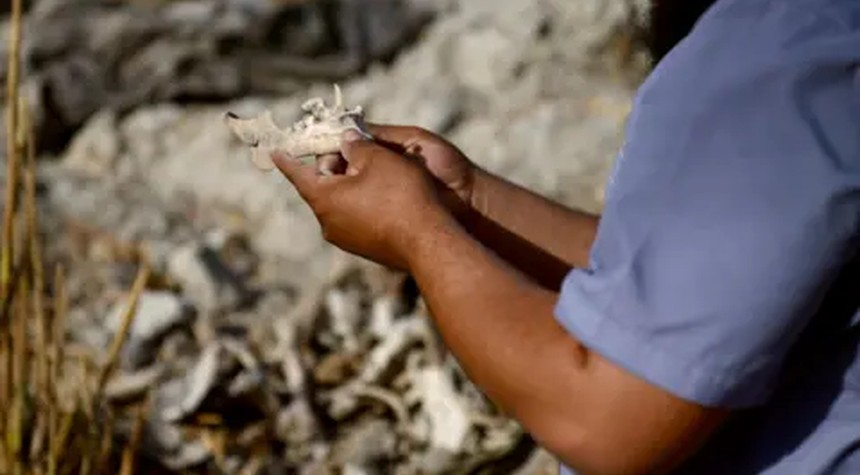
In the rural outskirts of Damascus, a grim discovery unfolds as workers methodically unearth the remains of victims from Syria’s brutal civil war. More than 60 mass grave sites have been discovered since the fall of the Assad regime last December, each telling a devastating story of systematic violence against civilians.
The latest discovery in al-Otaiba village, Eastern Ghouta, revealed approximately 175 bodies in a single mass grave. Local authorities confirm these victims were bulldozed into the earth during the height of the conflict, joining the ranks of more than 181,000 Syrian citizens who were forcibly disappeared or arbitrarily detained during the 14-year civil war.
Documentation from human rights monitoring groups indicates that 90 percent of these disappearances were carried out under the direction of the Assad regime. As Syria’s new interim government takes shape under the leadership of Ahmed al-Sharaa, the magnitude of these atrocities presents a sobering challenge for the nation’s recovery.
Among those searching for answers is Kasim Hamami, who recently identified his brother’s clothing at one of the mass grave sites. “Samer was a civilian,” Hamami explained, “newly-wed, just 15 days into his marriage. He had nothing to do with armed groups.” Samer, along with three nephews, was among approximately 400 civilians who fled Eastern Ghouta on February 27, 2014, seeking refuge from a devastating blockade that had cut off food supplies.
Documentary evidence, including video footage, confirms these civilians were ambushed by regime forces and Hezbollah militia members. The attack involved a coordinated series of landmine detonations along a 300-meter stretch of road, resulting in significant casualties.
Syria’s transitional government recently held its first parliamentary election, though questions remain about its democratic legitimacy. One-third of the assembly seats await appointment by Interim Leader al-Sharaa, while the remaining positions were filled through an indirect selection process.
President Sharaa has declared the investigation of missing persons “a national priority,” though the scale of the task is daunting. Each new grave site discovered adds to the mounting evidence of systematic human rights violations during the Assad era, while providing crucial closure for families who have waited years to learn the fate of their loved ones.
As Syria attempts to move forward, the wounds of its civil war remain fresh in the soil of its countryside, where agricultural fields have become testament to one of the most devastating humanitarian crises of the modern era. The process of healing these wounds will require not only time and resources but also an unwavering commitment to truth and justice from the nation’s new leadership.
Related: Venezuela Responds to US Covert Operations Authorization
