
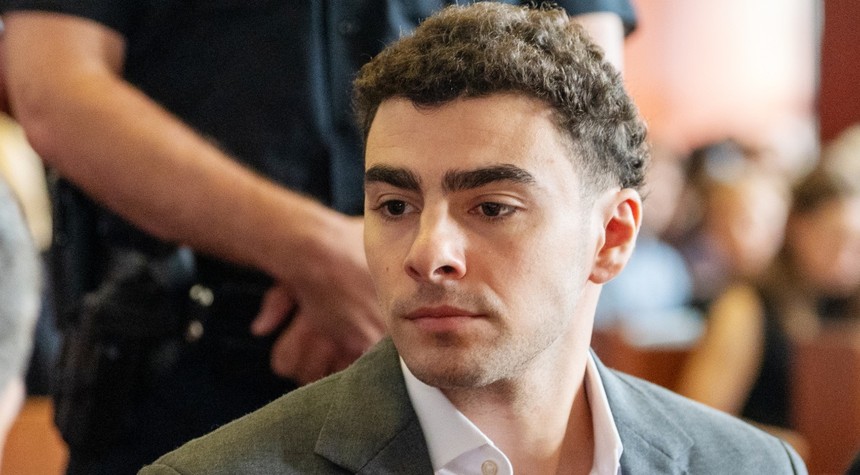
The legal proceedings surrounding Luigi Mangione, who admitted to killing UnitedHealthcare CEO Brian Thompson, have reached a critical juncture as his defense team continues to argue that double jeopardy protections should prevent a state murder trial from moving forward.
Mangione’s attorneys filed arguments Friday contending that his guilty plea to federal stalking charges in August should bar the separate state court prosecution for second-degree murder and weapons possession. The defense maintains that trying Mangione in state court would constitute prosecuting him twice for the same crime, a violation of constitutional protections.
The case presents a complex legal question that New York Supreme Court Justice Gregory Carro must now resolve. A decision on the dismissal motion is expected December 10. The state trial, originally scheduled to begin September 18, has been postponed indefinitely while the court considers the double jeopardy implications.
Manhattan District Attorney Alvin Bragg’s office has taken the position that the state case can legally proceed because its charges differ substantially from the federal prosecution. The federal charges centered on interstate stalking and cyberstalking through use of interstate facilities, each resulting in death. Prosecutors argue that the state indictment represents a traditional murder case, and murder generally falls outside the scope of federal statutes.
Mangione’s legal team, led by Karen Friedman Agnifilo, Marc Agnifilo, and Jacob Kaplan, countered Friday that the charges in both cases are materially identical. In a letter to the court, they emphasized that the federal offenses to which Mangione pleaded guilty involve overlapping legal elements with the state charges.
The defense made particular note of the weapons charge, stating that Mangione was charged in federal court with possession of the same firearm at the same time and location as the state prosecution alleges. “There is and was no other gun,” the attorneys wrote.
The stakes remain substantial. Mangione faces a potential life sentence when he returns to federal court on December 18. Should the state case proceed, he faces an additional maximum sentence of 25 years to life in prison.
Legal experts have noted that state prosecutors must overcome New York’s double jeopardy law, which requires distinct “evils” between two cases for separate prosecutions to proceed. Mangione’s lawyers maintain that the harms addressed in both the state and federal cases are identical. “There is no basis to find such a difference, much less a sufficiently great difference as to fit within the narrow statutory exception,” they argued in their most recent submission.
Earlier this month, prosecutors pointed to a double jeopardy exception that could provide a path forward if Justice Carro determines that unique elements were charged in the state case. Lead prosecutor Joel Seidemann argued that earlier litigation in the federal proceeding demonstrates the state charges are significantly different.
A ruling by U.S. District Judge Margaret Garnett determined that the stalking could not be considered violent under federal law, leading to the dismissal of two counts that would have made Mangione eligible for the death penalty. The Justice Department had announced its intention to seek capital punishment before that ruling.
The legal battle underscores the complexities that can arise when both federal and state authorities pursue charges arising from a single criminal act. The court’s forthcoming decision will determine whether Mangione faces one or two separate trials for his admitted role in Thompson’s death.
Related: Seven Shot at California Halloween Store in Targeted Attack, One Victim Dead