
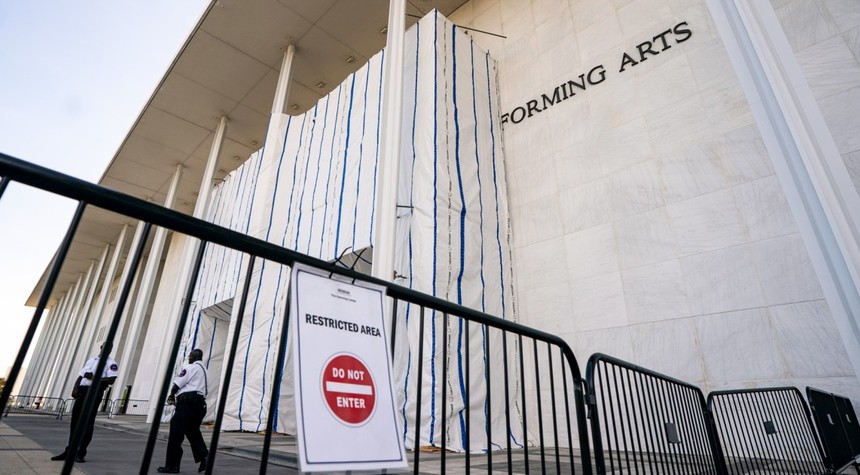
The board of trustees at the Kennedy Center for the Performing Arts voted Thursday to partially close the iconic Washington arts venue for up to two years while adding President Donald Trump’s name to the building, a decision that immediately drew legal challenges and accusations of defying federal court orders.
The board, composed primarily of Trump appointees, voted 20-3 to rename the facility “The John F. Kennedy Center for the Performing Arts Restored and Renovated by President Donald J. Trump” and designate its physical location as “President Donald J. Trump Plaza.” The vote followed an almost two-hour virtual meeting in which Commerce Secretary Howard Lutnick proposed the name change.
Under the approved plan, the Kennedy Center’s main building would close while a smaller addition known as the Reach would remain open for select events. This arrangement represents the board’s response to a May court order requiring the center to maintain its function as a memorial to President John F. Kennedy.
President Trump, who appointed himself chairman of the board last year, joined the virtual call for several minutes. The only dissenting votes came from three ex officio congressional members: Representative Joyce Beatty of Ohio, Senator Sheldon Whitehouse of Rhode Island, and Representative Rick Larsen of Washington, all Democrats.
Representative Beatty, who serves as one of the plaintiffs in ongoing litigation challenging the Kennedy Center’s renaming, issued a sharp rebuke of the decision. She characterized the move as a transparent attempt to circumvent the court’s ruling and a violation of congressional statutes. She pledged to continue fighting for what she described as a treasured national monument.
The legal landscape surrounding this decision remains complex. U.S. District Judge Christopher Cooper issued an order in May that temporarily blocked the Kennedy Center’s planned closure and questioned whether the board possesses the authority to rename what Congress intended as a living memorial for an assassinated president. Judge Cooper’s ruling also criticized the board’s previous closure vote as ill-informed and preordained.
Attorneys representing Representative Beatty and other plaintiffs argue that Thursday’s vote demonstrates blatant disrespect for the courts. They contend that a federal judge has already rejected the board’s unlawful attempt to rename the Kennedy Center and that this latest action represents more of the same defiance.
The May court order additionally required the board to provide a financial plan justifying any closure decision. By keeping the smaller Reach venue open, the board appears to be addressing concerns about maintaining some level of operations and revenue generation. The National Symphony Orchestra, which serves as the Kennedy Center’s chief tenant and has performed at the venue since its early days, would continue some performances under this arrangement.
The Kennedy Center has stood as the nation’s cultural center since its opening, serving as both a performing arts venue and a memorial to President Kennedy. The current controversy raises fundamental questions about the authority of presidentially appointed boards to alter the character and naming of national monuments established by Congress.
As this matter returns to the courts, the fate of one of Washington’s most recognizable cultural institutions hangs in the balance, caught between competing visions of presidential legacy and memorial preservation.
Related: World War II Memorial Vandalized with Spray Paint and Soap Bubbles
