
A prominent Democratic entrepreneur delivered a sharp rebuke to her own party this weekend, calling on Democratic lawmakers to set aside their opposition to President Trump and support military action against Iran’s Islamic Republic.
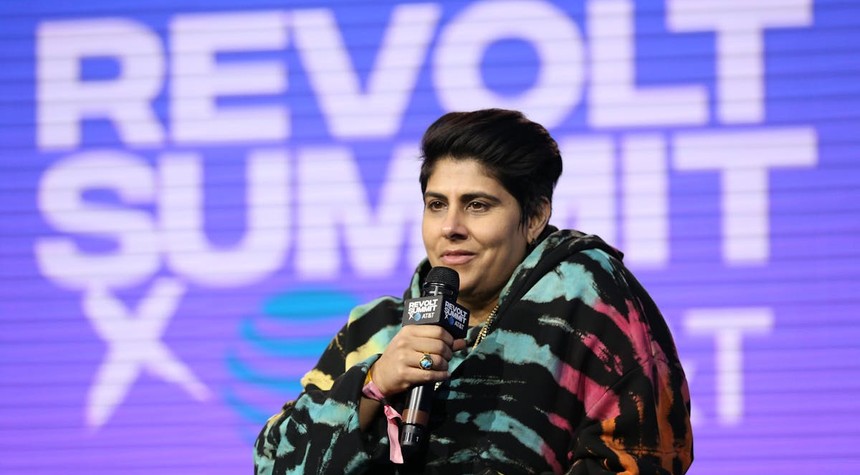
Moj Mahdara, an Iranian-American business leader and founding member of the Iranian Diaspora Collective, made her case during a Sunday television appearance, arguing that the recent strike represents far more than a single military operation in the Middle East.
“I think that it is imperative that the Democratic Party wake up and get past their dislike of Donald Trump and their feelings of international conflicts going on,” Mahdara stated, emphasizing the operation’s broader implications for Gulf state security and America’s strategic position relative to China.
Mahdara outlined what she described as an interconnected web of global security concerns, noting that Iran currently supplies 55 percent of its oil production to China despite existing sanctions. She drew a direct line between the fate of the Iranian regime and other international flashpoints.
“You want to support the people of Ukraine? You want to end that war? You have to dismember this Islamic Republic. It is non-negotiable. It is not a want to have. It is a have to have,” she said.
The entrepreneur argued that the collapse of Iran’s current government would trigger consequences extending well beyond the Middle East, affecting conflicts and political situations in Ukraine, Venezuela, and China’s sphere of influence.
Mahdara compared the potential impact to watershed moments in recent history. “This will be like ending the Soviet Union, the Berlin Wall. This is a transformational moment for humankind, for security, and as an American, this is in our interest to complete it,” she said.
Despite identifying herself as a committed Democrat, Mahdara expressed profound disappointment with her party’s current stance. “I am a huge Democrat,” she acknowledged, before adding, “I do not see myself in them in this moment.”
Her comments reflect a notable fracture within Democratic ranks over foreign policy, particularly regarding the appropriate response to Iran’s regional activities and its support for proxy forces throughout the Middle East. While many Democratic lawmakers have criticized the administration’s approach as potentially escalatory, Mahdara’s perspective suggests some party members view the situation through a different strategic lens.
The Iranian Diaspora Collective, which Mahdara helped establish, represents Iranian expatriates and their descendants who have advocated for regime change in their ancestral homeland. The organization has consistently argued that the Islamic Republic’s influence extends far beyond Iran’s borders and poses challenges to Western security interests.
Mahdara’s willingness to publicly break with her party on this issue underscores the complex political calculations surrounding Middle Eastern policy, where traditional partisan alignments do not always hold. Her argument that Iranian regime change serves American interests while simultaneously advancing humanitarian goals in multiple regions presents a case that transcends typical party-line positions.
As the debate over America’s role in the Middle East continues, voices like Mahdara’s represent a faction within the Democratic coalition that prioritizes strategic outcomes over partisan unity on foreign policy matters.
Related: Austin Gunman Wore Religious Messaging During Attack as FBI Examines Possible Extremist Ties
