
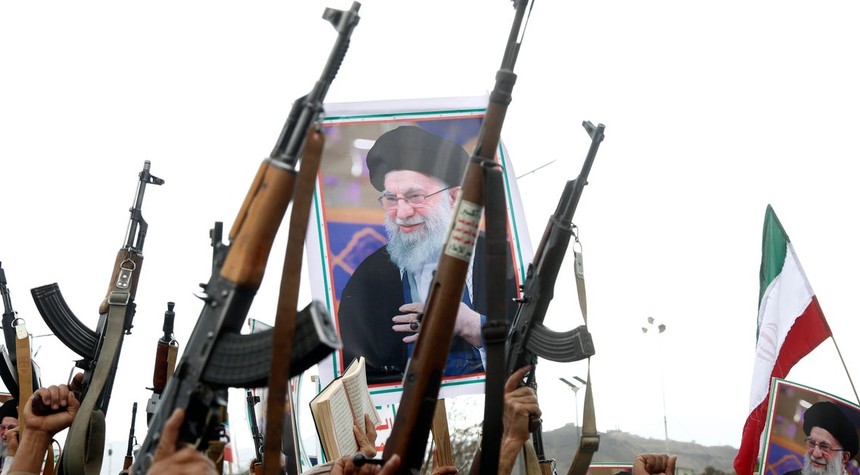
The escalating conflict between the United States and Iran has raised serious questions about potential threats within American borders, as intelligence experts warn of sophisticated Iranian operations designed to strike at the homeland.
According to the Institute for National Security Studies in Israel, Iran has launched more than 1,600 drone strikes targeting Israel, Jordan, Persian Gulf nations, and Cyprus. This aggressive regional campaign has prompted former counterterrorism officials to assess the nature and scope of threats facing Americans at home.
Sam Vinograd, who served as assistant secretary for counterterrorism and threat protection at the Department of Homeland Security, characterized Iran as presenting a “multi-dimensional threat to the homeland.” The Iranian regime, she explained, seeks to inflict damage across multiple domains: physical infrastructure, cyberspace, and the information environment that shapes public discourse.
The Iranian threat apparatus operates through what security experts describe as a layered network. At the regional level, Tehran maintains relationships with proxy organizations and like-minded terrorist groups. These partnerships extend the regime’s reach while providing plausible deniability for its operations.
More concerning for domestic security, Iran has developed what Vinograd terms “surrogate networks” operating within the United States itself. These networks consist of individuals recruited from various nationalities who are lawfully present in the country. The regime employs these surrogates as hired operatives, compensating them financially to carry out criminal activities including murder and assassination.
“Typically, they try to tap into individuals here in the homeland, from a range of nationalities that are lawfully allowed to be here, and that they actually just pay money to do their dirty work,” Vinograd stated.
The threat is not theoretical. A trial is currently underway in New York involving a defendant accused of plotting to assassinate American political figures, potentially including President Trump or former President Biden, on behalf of Iran’s Revolutionary Guard. This case represents one of several known instances where Iranian operatives have allegedly attempted to conduct lethal operations on American soil.
Iranian dissidents living in the United States have also found themselves targeted by Tehran’s long reach. The regime has demonstrated both the capability and willingness to pursue those it considers enemies, regardless of international borders or sovereignty concerns.
The United States has designated Iran as a state sponsor of terrorism, a classification that reflects the regime’s sustained support for terrorist organizations and its own direct involvement in terrorist activities. This designation carries significant legal and diplomatic consequences, but the practical challenge of countering Iranian operations remains substantial.
The convergence of regional aggression and domestic threat networks presents American security officials with a complex challenge. As tensions continue to rise in the Middle East, the potential for Iranian retaliation on American soil represents a serious concern that demands continued vigilance from both security services and the American public.
The facts are clear: Iran possesses the intent, capability, and demonstrated willingness to conduct operations against American interests, both abroad and at home. That is the way it is.
Related: Texas Senate Race Heads to Runoff as Incumbents Face Unexpected Challenges
