
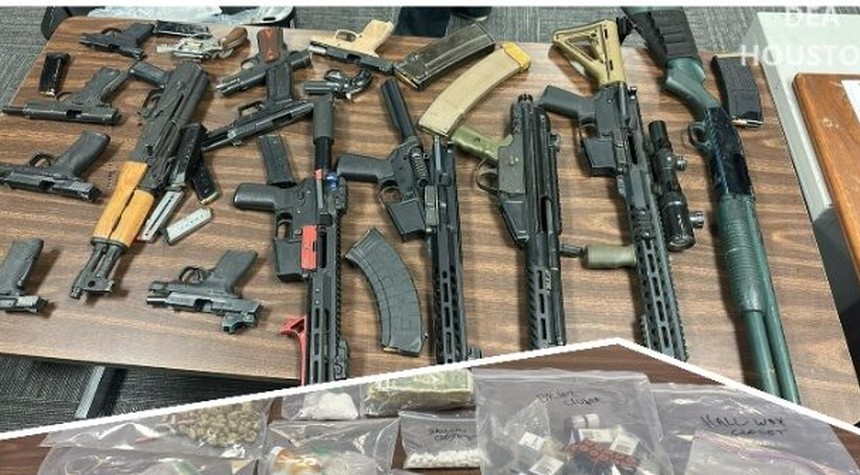
A coordinated law enforcement operation in Southeast Houston has resulted in the seizure of substantial quantities of illegal narcotics and weapons, marking another significant enforcement action in a city that continues to serve as a critical distribution point for drug trafficking organizations.
The raid, conducted by the Houston Police Department in cooperation with the Texas Department of Public Safety and the Drug Enforcement Administration, uncovered 40 pounds of methamphetamine, more than 100 pounds of marijuana, an undisclosed amount of cocaine, 20 grams of fentanyl, and 17 firearms at an apartment complex in the southeastern section of the city. Authorities also recovered an unspecified amount of cash during the operation.
While investigators have not yet publicly identified the criminal organization behind this particular operation, the scale and composition of the seizure bear the hallmarks of cartel-supplied distribution networks that have long operated throughout Houston and the broader Texas region. The combination of multi-pound quantities of methamphetamine and fentanyl, paired with a significant cache of weapons, typically indicates connections to larger transnational criminal enterprises operating supply chains that extend across the southern border.
Houston’s position as a major metropolitan center and transportation hub has made it an attractive logistics point for Mexican drug trafficking organizations seeking to distribute narcotics throughout the United States. Law enforcement officials have consistently documented the presence of these networks operating within the city, utilizing stash houses and distribution cells to manage the flow of illegal substances into American communities.
This latest enforcement action follows closely on the heels of another substantial drug seizure in Houston just one week prior. In that operation, federal agents from the DEA’s Houston field office, assisted by local police officers, raided a residence and discovered more than 4,000 illegal vape pens, 75 pounds of THC wax, 42 pounds of marijuana, three pounds of illegal mushrooms, and an additional quantity of cocaine.
The successive raids underscore the persistent challenge facing law enforcement agencies as they work to disrupt the drug distribution networks that continue to operate within major American cities. The presence of fentanyl in these seizures remains particularly concerning to public health officials, as the synthetic opioid has been linked to a dramatic increase in overdose deaths across the nation in recent years.
The coordination between federal, state, and local law enforcement agencies in these operations reflects the multi-jurisdictional approach necessary to combat organized drug trafficking. The DEA, which maintains a significant presence in Houston, works regularly with local police departments and state authorities to identify and dismantle distribution operations before narcotics can reach their intended markets.
As investigations continue, authorities have not announced any arrests connected to the Southeast Houston apartment raid. The ongoing nature of the investigation suggests that law enforcement officials may be working to identify additional suspects or trace the supply chain to higher-level operatives within the trafficking organization.
Related: Senate Introduces Bipartisan Bill to Ban Sports Betting on Prediction Markets
