
The Supreme Court has declined to intervene in a case involving electoral integrity, letting stand a decision by Ohio officials to remove a self-identified progressive candidate from the Republican primary ballot after he was found to have misrepresented his party affiliation.
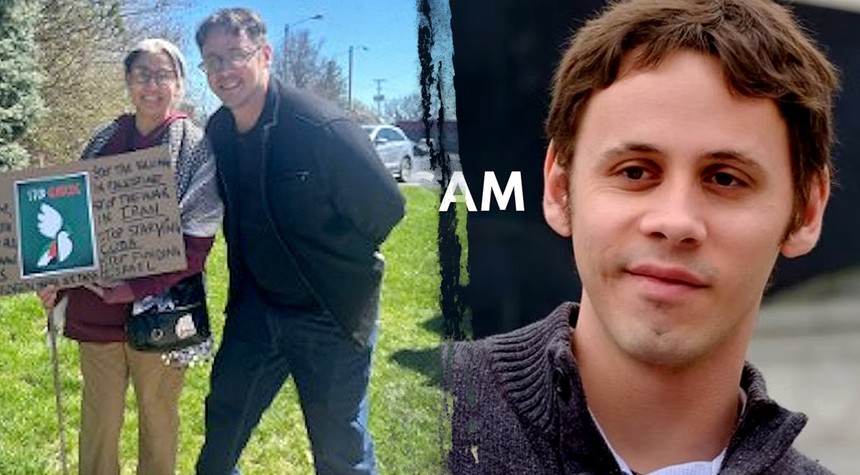
Samuel Ronan, who previously ran as a Democrat in state and national races, attempted to enter Ohio’s 15th Congressional District Republican primary against incumbent Representative Mike Carey. His candidacy came to an abrupt end after election officials determined he had falsely declared his party membership.
The case centers on a fundamental question of electoral honesty. When Ronan filed his declaration of candidacy, he signed under penalty of election falsification that he was a member of the Republican Party. Yet evidence presented to election officials told a different story.
Court documents reveal that Ronan was caught publicly acknowledging his candidacy was part of a deliberate strategy to run Democrats as Republicans in heavily conservative districts to gain political access. A Republican voter, Mark Schare, brought the matter to the Franklin County Board of Elections, presenting social media posts and interviews as proof of what he characterized as a scheme to mislead GOP voters.
In his defense, Ronan argued he had not lied about his affiliation, pointing to other politicians who had changed parties during their careers, including former President Ronald Reagan and President Donald Trump. However, this comparison proved unconvincing to the courts.
When the county election board deadlocked along party lines, Ohio Secretary of State Frank LaRose exercised his authority to remove Ronan from the ballot. LaRose framed the matter as one concerning the fundamental integrity of the electoral process, emphasizing the seriousness of what he described as an attempt to infiltrate the party through deception.
Ronan responded by filing a federal lawsuit, claiming his First Amendment rights had been violated because the state used his own political statements as grounds for removal. Chief U.S. District Judge Sarah D. Morrison rejected this argument decisively.
In her opinion, Judge Morrison wrote that the First Amendment does not shield a candidate who submits a fraudulent declaration of candidacy. “It cannot be the case that a State must allow a candidate on a partisan ballot even if he lied about his party affiliation simply because the First Amendment is implicated,” she stated.
The judge acknowledged that Ohio law permits candidates to legally change their political affiliation. However, she noted that election officials are not obligated to disregard a candidate’s public statements that directly contradict their sworn declarations. The court emphasized that the state maintains a substantial interest in preventing candidates from fraudulently attesting to party membership.
The Supreme Court’s decision to leave this ruling in place reinforces the principle that electoral processes must be protected from deliberate misrepresentation. While political speech enjoys broad constitutional protection, that protection does not extend to fraudulent statements made under oath in official election documents.
This case serves as a reminder that the integrity of our electoral system depends not merely on procedures and regulations, but on the fundamental honesty of those who seek to participate in it. The courts have made clear that there are limits to what can be justified in the name of political strategy, and that those limits are drawn at the line of truthfulness in sworn declarations.
Related: Haitian Migrant Under Temporary Protection Charged in Brutal Killing
