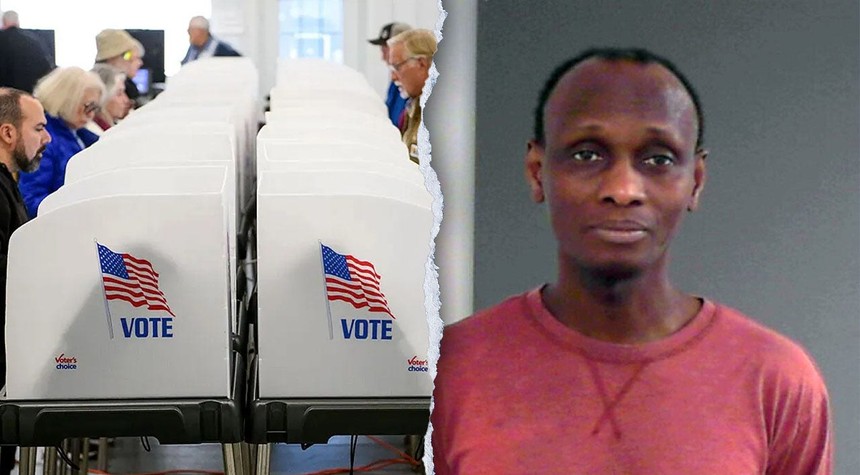
A case in Philadelphia has brought renewed attention to vulnerabilities in America’s electoral system. An illegal immigrant, identified as Mahady Sacko, a Mauritanian citizen residing in the United States without legal authorization, fraudulently cast ballots in every federal election for more than ten years before being discovered.
The revelation has prompted warnings from immigration and election integrity experts about the broader implications for American democracy.
Simon Hankinson, a senior research fellow at the Heritage Foundation specializing in immigration policy, emphasized that the greatest danger lies not merely in the act itself, but in its effect on the American electorate’s faith in the democratic process.
“The most important thing is perception,” Hankinson stated. “People have to believe that their vote counts. That is a much more serious long-term threat.”
Hankinson’s concerns center on a fundamental principle of democratic governance: the confidence citizens place in their electoral institutions. When that confidence erodes, the consequences extend far beyond individual cases of fraud.
“We have a perception in the United States that elections are free and fair,” Hankinson explained. “If even the appearance of impropriety, the appearance of corruption, is bad enough to turn people off, to make people not interested in going to vote, to think their vote does not count anyway, then that is really what undermines democracy.”
The Philadelphia case illustrates what Hankinson describes as a systemic vulnerability. Despite existing safeguards designed to prevent non-citizens from participating in federal elections, Sacko managed to register and vote repeatedly over the course of more than a decade without detection.
This failure raises questions about the effectiveness of current verification procedures and the potential scope of similar violations across the country. While the full extent of illegal voting remains a subject of debate among researchers and policymakers, individual cases like this one provide concrete evidence that gaps exist in the system.
The implications extend beyond simple vote tallying. When citizens lose faith in the integrity of elections, they become less likely to participate in the democratic process. This disengagement poses its own threat to representative government, potentially more insidious than the fraudulent votes themselves.
Election integrity has become an increasingly prominent issue in American political discourse. Advocates for stricter verification measures argue that cases like the one in Philadelphia demonstrate the need for enhanced safeguards, including more rigorous citizenship verification at the point of voter registration.
Critics of such measures contend that they may create barriers to legitimate voting, particularly among eligible citizens who lack certain forms of identification. The challenge for policymakers lies in balancing accessibility with security, ensuring that all eligible citizens can vote while preventing those without legal authorization from doing so.
The Heritage Foundation has been at the forefront of research into election integrity issues, maintaining databases of documented cases of voter fraud and advocating for policy reforms at both state and federal levels.
As the nation continues to grapple with questions of election security and voter confidence, cases like Sacko’s serve as reminders that the systems designed to protect the franchise require constant vigilance and, where necessary, improvement. The integrity of American democracy depends not only on the reality of fair elections but on the public’s belief in that fairness.
Related: Age and Leadership Debate Reaches Mississippi’s Second District Primary