
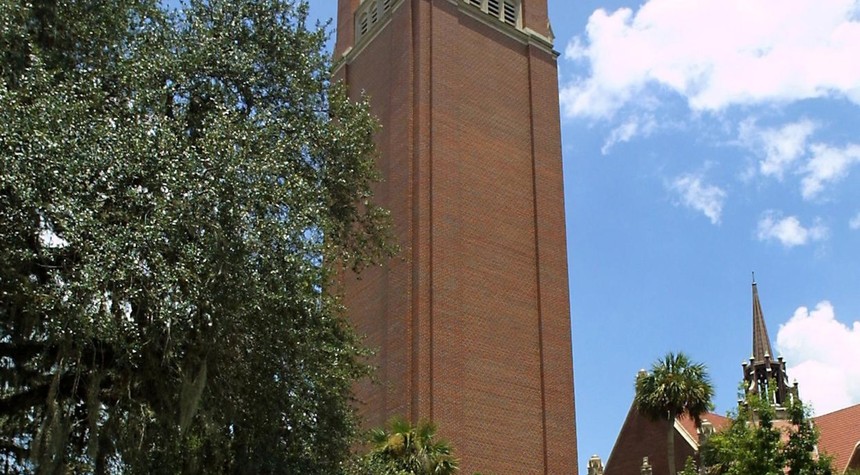
The University of Florida has announced its intention to deactivate the campus College Republicans chapter as a registered student organization following reports that some members engaged in antisemitic conduct.
University officials disclosed over the weekend that they received notification from the Florida Federation of College Republicans that the state organization had already disbanded the Gainesville campus chapter. The federation made this determination after concluding that certain members had participated in a pattern of conduct violating the organization’s established rules and values, including what was described as a recent antisemitic gesture.
The university has stated it will work with the Florida Federation of College Republicans to reactivate the campus chapter once the state organization determines it is appropriate to do so, provided new student leadership is installed.
This development represents the second instance this month in which a Florida public university has taken disciplinary action against a Republican student organization over allegations of racist or antisemitic behavior. Earlier in March, Florida International University in Miami initiated an investigation into a group chat that contained violently racist language, antisemitic remarks, and misogynistic content. That chat was reportedly started by an official associated with the Miami-Dade chapter of the Republican Party and included both students and prominent conservative figures at the university.
The incidents raise significant questions about organizational oversight and the responsibility of political groups to maintain standards of conduct consistent with their stated values. College Republican chapters have long served as training grounds for young conservatives entering political life, making the maintenance of ethical standards particularly consequential.
The University of Florida has not provided specific details regarding the nature of the antisemitic gesture that prompted the Florida Federation of College Republicans to disband the chapter. However, the university’s willingness to support the state organization’s decision and assist with eventual reactivation under new leadership suggests a measured approach aimed at addressing the immediate conduct violations while preserving the opportunity for conservative students to organize on campus.
These Florida cases follow a pattern of similar incidents at universities nationwide. Last fall, New York’s Republican State Committee suspended a Young Republican organization, though the circumstances of that suspension were not detailed in available reports.
The deactivation process at the University of Florida will effectively remove the College Republicans’ status as a registered student organization, potentially limiting their access to campus facilities, funding mechanisms, and official university recognition. The path to reactivation will depend on the Florida Federation of College Republicans’ timeline and the identification of new student leadership committed to upholding organizational standards.
University officials have emphasized their commitment to fostering an inclusive campus environment while supporting the rights of students to engage in political activity. The balance between these principles will be tested as the university navigates the deactivation process and potential future reactivation of the chapter.
Related: DC Water Restores Service Following 240 Million Gallon Sewage Disaster
