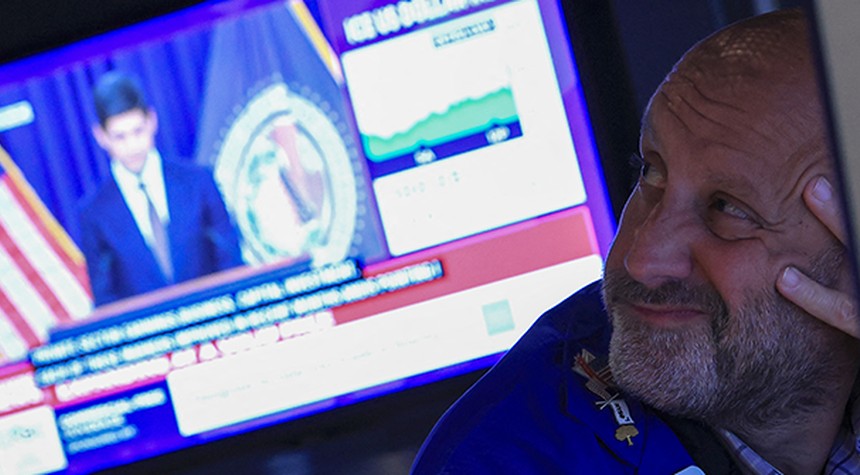
Federal Reserve Chairman Kevin Warsh delivered a straightforward message to investors last week at the International Monetary Fund’s annual meeting in Bangkok. He would not telegraph the central bank’s intentions regarding interest rates.
“I don’t prejudge meetings. I don’t believe in saying now what I might do at the meetings we have in the balance of this year,” Warsh stated. “It’s a new chapter at the Fed, and we’re not in that business anymore.”
The response from Wall Street proved both remarkable and revealing. Rather than accepting uncertainty, investors interpreted the absence of guidance as guidance itself. Before Warsh’s remarks, fed funds futures indicated a 72 percent probability that the Federal Reserve would hold rates steady at its October meeting. Following his statement, that probability climbed above 85 percent. By Thursday evening, it reached 95 percent, a record expression of certainty less than a week before the scheduled meeting.
This represents an extraordinary development in the relationship between the Federal Reserve and financial markets. Investors have become so conditioned to forward guidance that they now extract meaning from its explicit absence, hearing confirmation of their existing expectations in statements designed to provide none.
The difficulty with this interpretation is that economic data increasingly support the case for another rate increase. The Federal Reserve raised its benchmark rate by a quarter percentage point in September, establishing a target range of 3.75 to 4.00 percent. Most Fed officials anticipated at that meeting that another increase would prove appropriate before year’s end.
Subsequent developments have strengthened rather than weakened that assessment. The inflation picture has deteriorated considerably. The consumer price index rose 0.6 percent in September and stands 3.7 percent higher than a year earlier. Producer prices jumped 1.3 percent for the month and 6.3 percent annually.
More concerning still, inflation has spread beyond energy sectors. Core consumer prices, which exclude volatile food and energy components, rose 0.3 percent. Producer prices excluding these categories climbed 0.7 percent.
Meanwhile, the economy shows no signs of weakening under the current rate environment. Consumer spending remains resilient. Business investment continues to expand. American manufacturers have increased production of machinery, electrical equipment, and semiconductors. The Conference Board’s Leading Indicators, released Thursday, suggest an economy gaining rather than losing strength.
Jobless claims fell to 194,000 last week. The three-month average of claims has reached its lowest level since 1969.
These conditions raise a fundamental question about monetary policy. A reasonable argument exists that the Federal Reserve’s current policy rate fails to provide meaningful restraint given the economy’s momentum. If the natural rate of interest has risen due to stronger productivity growth and investment demand, the central bank may need to maintain higher rates to control inflation effectively.
With inflation accelerating rather than moderating, the rationale for patience grows increasingly difficult to support. The Federal Reserve faces a choice between market expectations and economic reality. That is the way it is.
Related: Italian Racing Prodigy Antonelli Poised to Become Youngest Formula 1 Champion in History